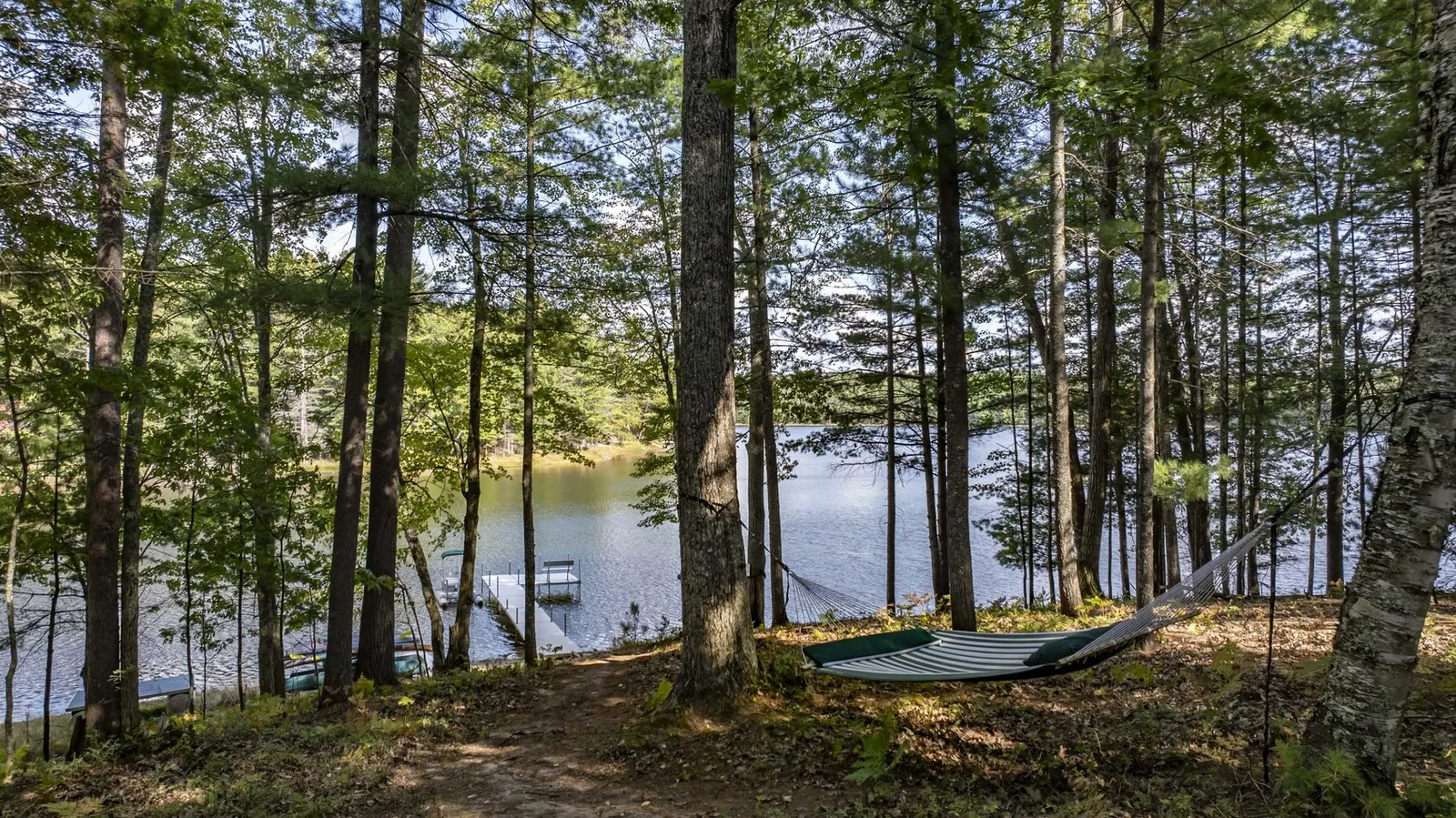
Guests ask us all the time about wildlife watching near Eagle River — where to go, what they might see. Our honest answer: in Wisconsin's Northwoods, the wildlife usually finds you first. Spend a weekend at a lakefront cabin and the show comes to the shoreline — loons calling across the water at dusk, a bald eagle working the far bank, deer stepping out of the pines at first light. Here's who you're likely to meet, where to look, and how to watch like a good neighbor.
The headliner
Why do people come here just for the loons?
If the Northwoods has a soundtrack, it's the call of the common loon — that long, wavering wail echoing across still water after dark. These big black-and-white divers summer on our lakes, arriving soon after the ice goes out in spring and staying until late fall, and Vilas and Oneida counties are some of the best loon country in the Midwest. Early summer is the sweet spot, when chicks ride on their parents' backs; by late summer the young are diving on their own.
Watch from a dock, a kayak, or a drifting boat, and keep a respectful distance — if a loon flattens low on the water or rears up and "dances," you're too close. Back off and let the binoculars do the work.
Look up
Where can you spot bald eagles?
Just about anywhere, once you start looking — this area didn't end up named Eagle River by accident. Bald eagles nest along the chain and the rivers, and it's a rare boat ride where we don't spot at least one white head in a shoreline pine. Scan the tallest trees along any lake, watch the sky over open water, and in the cold months check wherever the river stays open — eagles gather near open water all winter. In summer, ospreys work the same lakes; the dramatic hover-and-plunge is the giveaway.
The supporting cast
Who else shows up?
White-tailed deer
Dawn-and-dusk regulars along forest edges and quiet backroads. In fall the bucks are on the move — drive slowly at twilight and keep your eyes wide.
Otters & beavers
Check quiet bays and inlets in the morning calm. A V-shaped wake at dusk is usually a beaver commuting; river otters travel in splashy, playful families.
Herons & cranes
Great blue herons stalk the shallows all summer, while sandhill cranes bugle over the marshes — a prehistoric sound from a prehistoric-looking bird.
And yes — there are black bears out here. Seeing one is a genuine thrill, and it's almost always a shy one crossing a road well ahead of you. Keep coolers and trash buttoned up at the cabin and the bears will keep to themselves.
Fieldcraft
How do you actually see more?
Go out at the edges of the day. Dawn and dusk are when the Northwoods changes shifts, and the hour around sunrise is worth three in the afternoon. Get on the water — a kayak sliding slowly along a shoreline is the best wildlife blind ever invented, and both of our cabins include kayaks. Then sit still: claim a dock chair or a quiet bend on a hiking trail, give the woods ten minutes to forget you're there, and let the activity resume around you.
A few manners that matter: give nesting loons a wide berth, never feed wildlife, and keep dogs leashed in the woods. Binoculars beat a closer approach every single time.
Where to stay for the show
The best wildlife blind we know is a lakefront cabin with the coffee on. The O.G. sits right on Lake Arbutus — loons off the dock are a regular feature — and The Grandy Dandy on the Sugar Camp Chain backs up to quiet, wooded water. Both include kayaks for that sunrise paddle.
Good to know