There are two ways to fish the Eagle River Chain once it locks up, and most of the friendly arguing in a bait shop comes down to choosing between them. Set tip-ups and wait, or drill a hole, drop a jig, and keep moving until something answers. We do both, usually in the same morning, and here is how we decide which one leads.
The waiting game
What are tip-ups actually good for?
A tip-up is a patience machine, and that is its strength. You set live bait at a chosen depth, walk away, and let the lake work for you. Spread a legal spread of them across a weed flat or along a drop-off and you are suddenly covering a hundred yards of water instead of eight inches of it.
On the chain that makes tip-ups the honest choice for northern pike and walleye. Both roam, and roaming fish find a bait sitting still in the right place. Pike in particular seem to trip the flag the moment you have poured coffee and sat down.
Tip-ups are also the sociable option: with kids along, a flag snapping upright across the ice is an event the whole group watches, and nobody has to hold a rod to be part of it.
The hunting game
When does jigging win?
Jigging is the opposite temperament. One hole, one short rod, constant feedback. You feel every tap, you watch the line, and if nothing happens in a few minutes you move and drill again. It rewards curiosity rather than patience.
That is why jigging is the better tool for bluegill, crappie and perch, which hold in pockets rather than wandering, and for walleye in the last half hour of light, when they slide up onto a break and want something moving. A flasher turns jigging from guesswork into something close to hunting: you can see whether anyone is home before you commit.
How we would split the day
Can you just do both?
Yes, and that is the local answer. Tip-ups buy coverage while you go looking with a jig, and a day using both tends to sort itself into three parts.
Morning
Set tip-ups along the deep edge of a weed flat, then jig the holes between them. The spread works while you prospect.
Midday
Leave the flags and go hunting. Drill into the back bays, fish each hole for a few minutes, and chase panfish until you find a pocket worth staying on.
Last light
Move everything back to the drop-off. Jig the break for walleye and keep a tip-up or two out behind you for whatever cruises through.
Where on the chain
Where do you set up, and what about the ice?
The Eagle River Chain is the world's largest inland chain of freshwater lakes, which is wonderful for fishing and genuinely something to respect in winter. Water moves between the lakes, so the narrows and channels can stay thin long after the open basins have locked up, and they can open back up during a thaw. We stay off them and fish the broad stuff: weed flats, the first real drop-off, and the mouths of the quieter bays.
Before you drive or walk out, read our guide to how the chain freezes, then stop at a local bait shop and ask what the ice is doing that week. Carry picks, go with somebody, and measure the ice yourself rather than trusting somebody else's track. For the rest of the winter picture, our ice fishing guide and the fishing overview cover gear, species and access.
Where to stay for a first-ice weekend
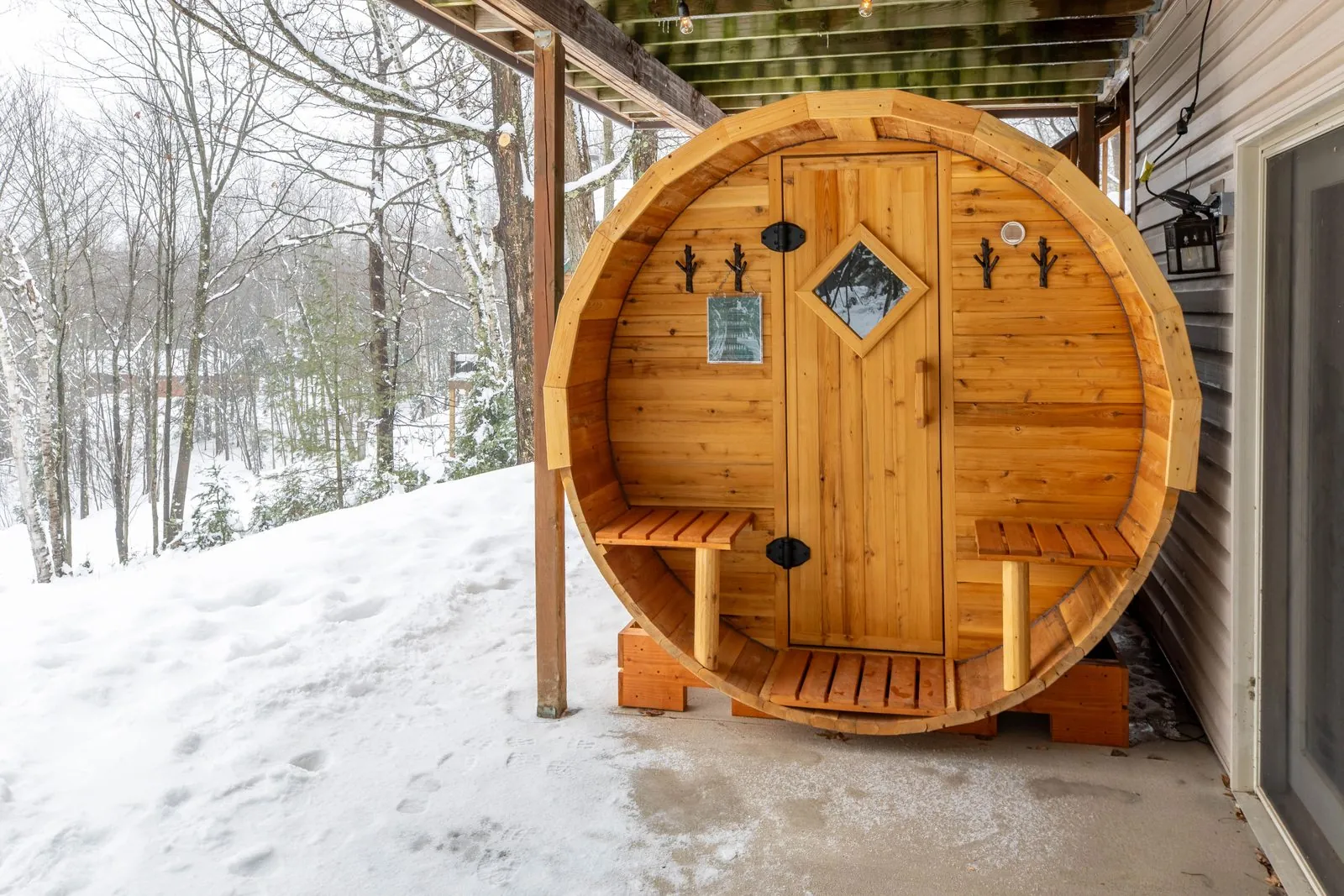
Both cabins are open all winter and sit right on the water, so when the ice is safe you can fish from the door and thaw out inside. The O.G. on Lake Arbutus has a year-round hot tub and a log great room built for cold afternoons, and The Grandy Dandy on the Sugar Camp Chain adds a cedar barrel sauna and a game room for when the wind picks up. Winter weekends are quieter than summer, but the good ones still go early.
Good to know