Ask around town about fishing near Eagle River and you will hear about the Eagle River Chain — the famous one. Ask us, and we will ask a question back: how much of your week do you want to spend sharing water?
There are two boatable chains within a quarter of an hour of each other here, and choosing between them shapes a fishing trip more than any other decision. One is enormous and well known. The other is small, quiet and sits at the bottom of our yard.
The water
What is the actual difference between the two chains?
The Eagle River Chain runs straight through town. Eagle, Otter, Watersmeet, Catfish, Cranberry, Duck, Scattering Rice, Yellow Birch and Long are the names you will hear most, joined by short stretches of river and narrow thoroughfares rather than open crossings. Hang the Three Lakes Chain off the south end, reached through the Burnt Rollways boat hoist, and you have roughly twenty-eight connected lakes — the billing Eagle River trades on as the world’s largest inland chain of freshwater lakes.
The Sugar Camp Chain is a different animal: five connected lakes southeast of town, in the band of Oneida County between Eagle River and Three Lakes, about fifteen minutes from downtown. The structure is the same idea — basins joined by narrows, boatable end to end in a shallow-draft boat — at a fifth the lake count and a small fraction of the traffic. There is a public launch off County Highway D.
Both hold the same spread of fish: musky, walleye, northern pike, smallmouth and largemouth bass, crappies and bluegills. The species list is not the difference. Scale, traffic and how long the water takes to learn are.
Choosing
Which chain should you point the boat at?
Fish the Eagle River Chain if
You want room to roam and variety under the boat — big open basins to troll, dark backwaters to pick apart, a shot at the musky water the county is known for. Launches are in town, tackle and a guide are minutes away, and if a bay is busy the next lake is ten minutes off.
Fish the Sugar Camp Chain if
You want quiet. Five basins, almost no boats once the summer crowd pulls out, and a real chance of having a basin to yourself on an October morning. Smaller water also means you can learn it properly instead of sampling it.
Either way, fish the narrows
What both chains share is their connections. Current through a thoroughfare keeps bait moving and pins predators somewhere you can find. If you have one hour and no plan, fish the narrows — true on five lakes and on twenty-eight.
In practice
Does the size difference change how you fish?
Mostly it changes your first day. On twenty-eight lakes, day one is reconnaissance, and a good chunk of the morning goes into idling through no-wake channels to get somewhere. On five lakes you can see the whole chain before lunch and spend the rest of the week refining what you found — which is why a short trip often fishes better on the smaller chain.
Cold water sharpens the contrast. As the weed dies back everything concentrates into three kinds of place: the deep edges where the last green weed meets open water, the rock and gravel that holds heat a little longer, and the narrows. On the Sugar Camp Chain there are few enough of those to check them all in a session. On the Eagle River Chain you choose a neighbourhood and trust it.
For lakes within the big chain, our guide to reading the Eagle River Chain works through the map; the musky primer covers tactics, and we wrote up fall fishing the Sugar Camp Chain separately. Check current Wisconsin DNR season dates before planning a trip around one species.
Where to stay, depending on which you pick
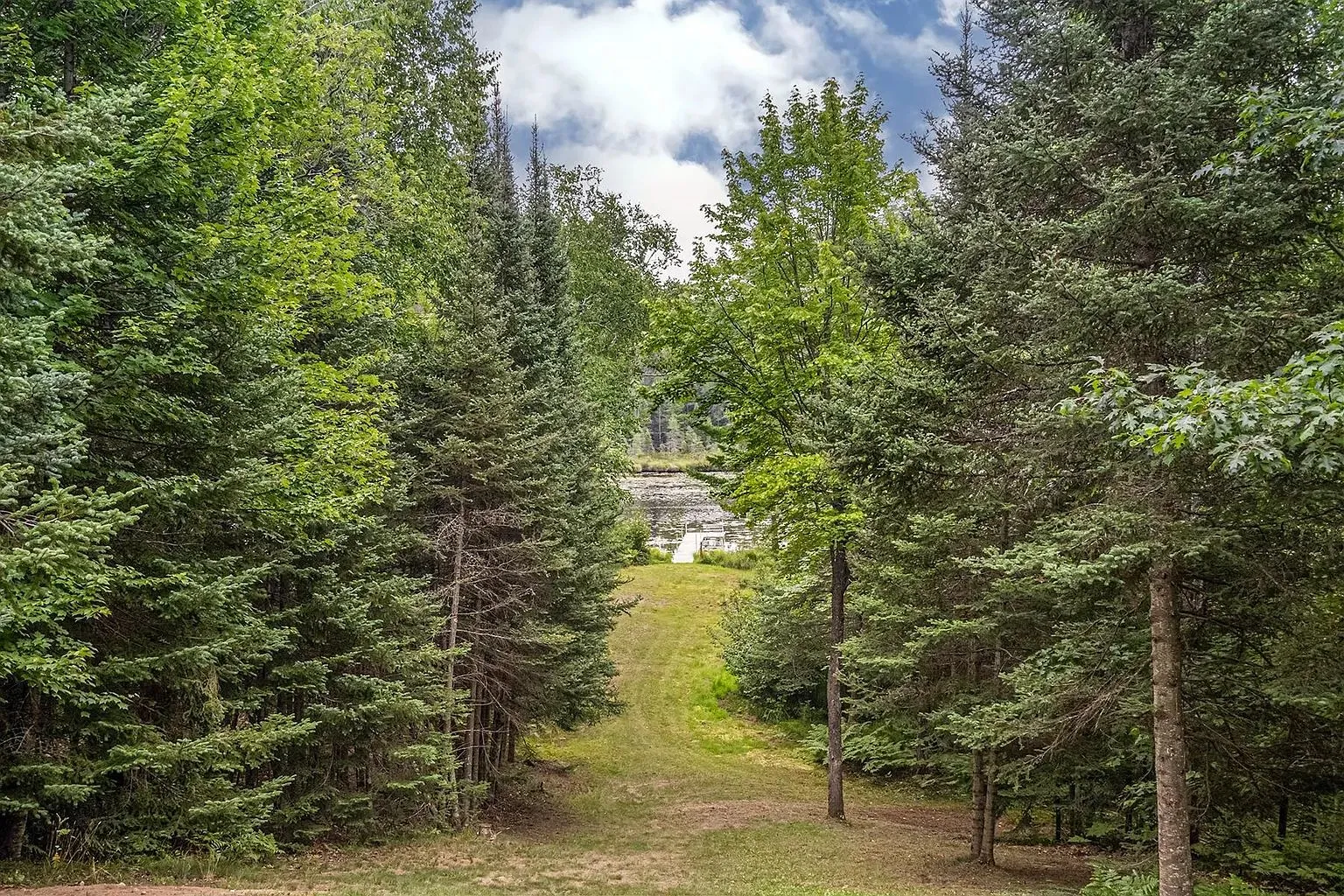
If the answer is the Sugar Camp Chain, The Grandy Dandy sits on it — private dock at the bottom of the yard, kayaks, a cedar barrel sauna and a basement game room for the day the wind is wrong. If you would rather have small, private, no-wake water, The O.G. is our hand-hewn log cabin on Lake Arbutus, with a sandy beach and a year-round hot tub. Either one puts you inside fifteen minutes of both chains.
Questions