The first thing many guests mention after a night here isn't the cabin — it's the sky. Turn off the porch light, walk down to the dock, and the Northwoods hands you a ceiling of stars most of us forget is even there. Out here the Milky Way isn't a figure of speech; it's a bright, dusty river you can trace with a finger. Here's how we'd plan a night of stargazing around Eagle River — and how to give yourself a real shot at the northern lights.
Why here
Why does the sky get so dark up here?
The short version: almost nobody's out here making light. Our corner of Vilas and Oneida counties is mostly forest, lake, and small towns, so there's little of the skyglow that erases the stars over a city. Point yourself away from Eagle River's small downtown — toward the Nicolet National Forest and the quiet lake country — and the dark deepens fast.
A lakefront spot adds a low, open horizon over the water — no streetlights or rooflines in the way, and the surface handing the brightest stars back as reflections. On a clear, moonless night, expect the Milky Way's core, a spread of constellations, and, if you're patient, a shooting star or two.
Timing
When's the best night to look up?
Three things make or break a stargazing night. Chase a new moon — a bright full moon washes out all but the boldest stars. Wait for a clear, dry sky; the crisp air behind a passing cold front is often the most transparent of all. And give it time after sunset — true darkness doesn't settle in until an hour or so past dusk, and your eyes need a good twenty minutes to adjust.
Spring
Milder nights and a chance at an early aurora around the March equinox, before the bugs are out.
Summer
Warm enough to lie back on the dock while the Milky Way rides high, and the Perseid meteor shower peaks each August.
Fall
Crisp, dry air brings some of the clearest skies of the year — and another aurora window opens around the September equinox.
Winter
The longest, darkest nights of all — Orion overhead, the Geminids in December, best watched from the hot tub.
Aurora
Can you really see the northern lights near Eagle River?
Sometimes — and when it happens, nobody forgets it. We're far enough north and dark enough that when a strong geomagnetic storm rolls through, the aurora can glow low across the northern horizon: green curtains, sometimes a wash of pink or red. It's never a sure thing, so treat it as a bonus rather than a plan.
To improve your odds, find an open view to the north — a dock or north-facing shoreline is ideal — kill every light, and let your eyes adjust for twenty minutes; your phone camera often catches the color first. Check a space-weather forecast before a late night: NOAA's aurora dashboard and a few free apps track the Kp number that hints at how far south the lights will reach. Odds rise around the spring and fall equinoxes.
The how
What do you actually need to bring?
Less than you'd guess — your eyes are the main instrument, and the dark sky does the rest. A reclining chair or a blanket on the dock keeps you out long enough for a meteor shower to unfold. A red flashlight (or your phone's red-light mode) saves the night vision you spent twenty minutes building. Add bug spray in summer and a layer the rest of the year. A free star-map app names what's overhead, and cheap binoculars reveal the moon's craters and the moons of Jupiter — no telescope required.
Where to stay for the stars
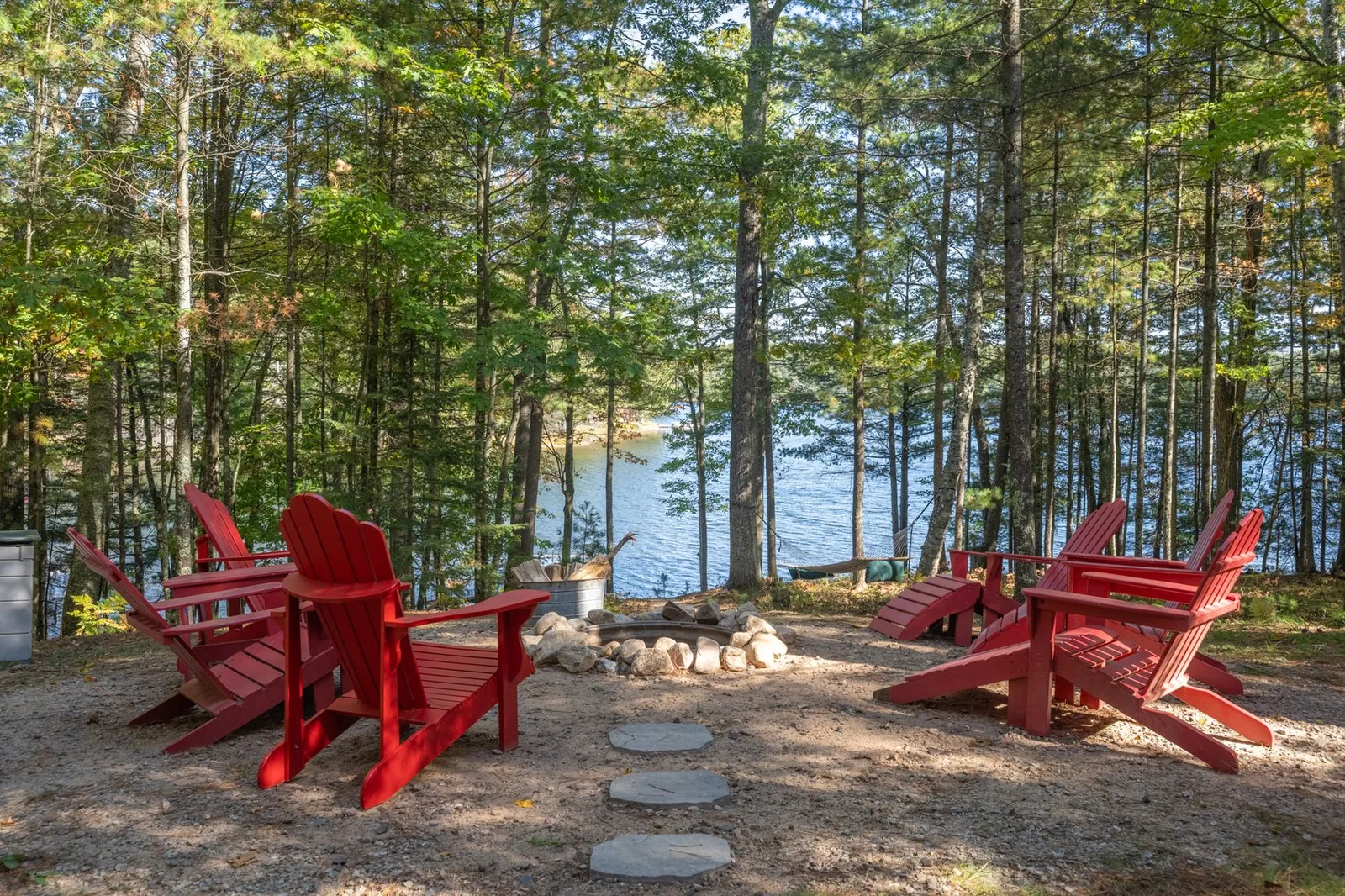
Both of our cabins sit right on the water with the dark sky out the door — The O.G. on Lake Arbutus and The Grandy Dandy on the Sugar Camp Chain, each with a private dock, a firepit, and a hot tub made for looking up on a cold, clear night. Bring a few warm layers (our seasonal packing guide has the list) and let the porch light stay off.
Good to know