Musky gets all the headlines around here, and we understand why — but if you ask us which fish makes for the best day on the water, we will say smallmouth bass every time. They are everywhere on the Eagle River Chain, they pull like something twice their size, and the fall bite is one of the honest secrets of the Northwoods. Here is how we would plan a smallmouth trip out of the cabin.
Timing
When is the smallmouth bite at its best?
Smallmouth will bite all summer, especially early and late in the day, but the run we look forward to comes when the water starts dropping into the fifties. Once those first cool September nights arrive, the fish know what is coming and start feeding hard ahead of winter. That gives you roughly six weeks of excellent fishing from early fall into late October — the same weeks the hardwoods are turning, which is not a bad way to spend a morning.
A cold front will not shut them down the way it shuts down other fish. If anything, a gray, breezy, slightly miserable afternoon is when we would most want to be out there.
Where to look
Where do they actually hold?
The rule for smallmouth on the Eagle River Chain — the world's largest inland chain of freshwater lakes — is hard bottom. Sand and weeds are fine for other species; smallmouth want rock. Find gravel bars, rocky points that fall into deeper water, riprap along the shore, and the channels that connect one lake to the next. Those channels are a gift, because current pushes bait through them and the fish sit and wait.
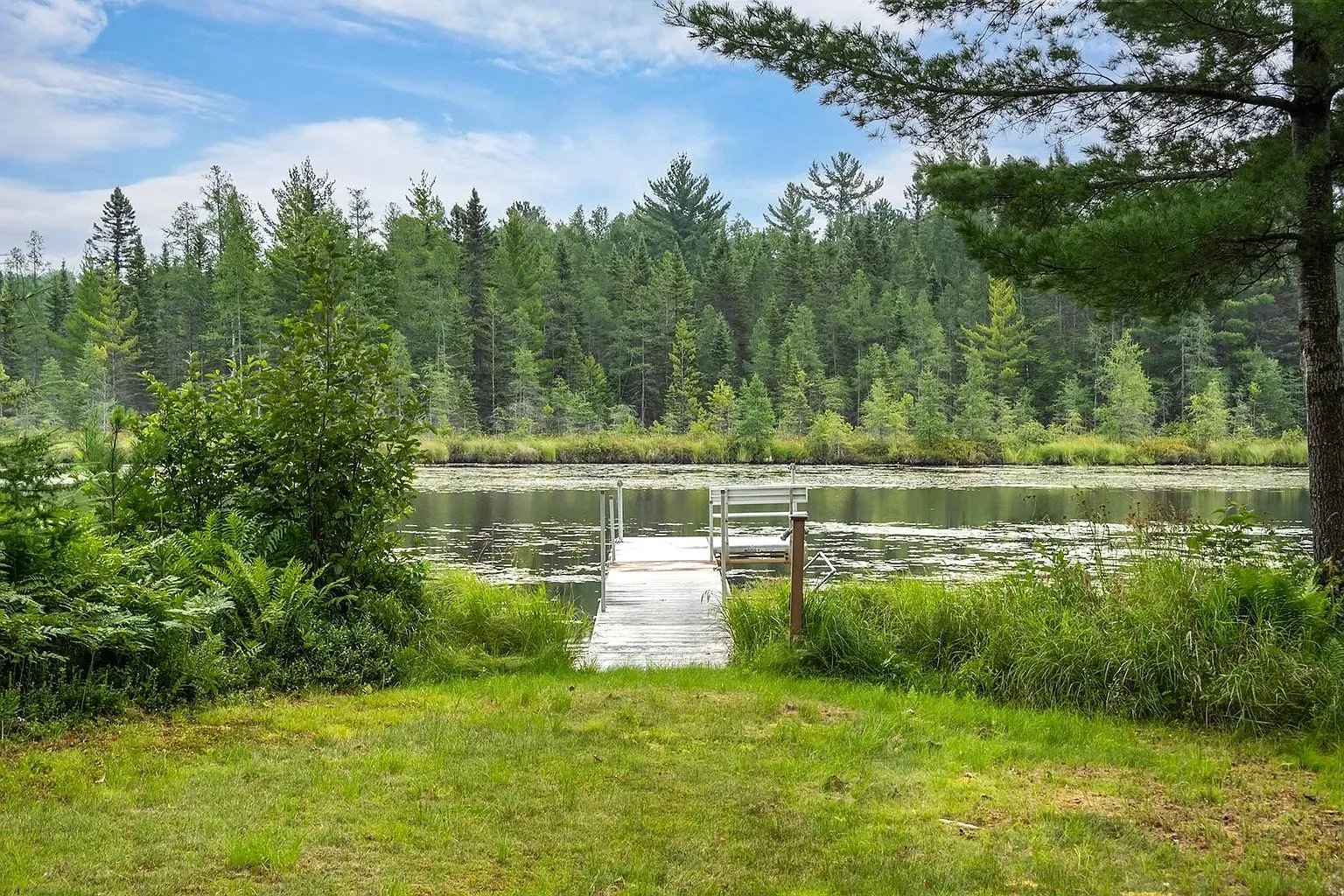
In summer you will catch them shallow on those rock edges. As the water cools they slide out a little deeper and bunch up, which is the whole reason fall fishing feels so good: once you find one, you have usually found a dozen. Over on the Sugar Camp Chain it is the same story, and the water right off The Grandy Dandy's dock is a fair place to start a morning.
Tackle
What should you throw?
Tubes and Ned rigs
Dragged slowly across rock, this is the closest thing to a sure bet. If you only bring one thing, bring soft plastics in something that looks like a crayfish.
Jerkbaits
Once the water turns cold and clear, a suspending jerkbait worked with long pauses is hard to beat. Let it sit longer than feels reasonable.
Crankbaits
The fastest way to find a school. Cover a rocky shoreline until something hits, then slow down and work that spot properly.
Medium spinning gear with six- to ten-pound line handles almost everything you will hook. And if you would rather not fuss with lures, live bait on a simple slip-sinker rig catches plenty of fish.
Make a trip of it
Can you fish it without a boat?
You can. Both cabins come with kayaks, and a kayak is a genuinely good smallmouth boat — quiet, shallow, and easy to hold on a rock point in a light wind. Dock fishing works too, especially at first light and again in the last hour of daylight. If you do want more water under you, there are public landings scattered around the chain.
Pair a morning on the rocks with the rest of the season: the fall color peaks over the same weeks, our fishing page covers the other species worth chasing, and a Friday fish fry in town is the correct way to end the day. One housekeeping note: bass regulations vary by water and do change, so pull up the current Wisconsin DNR rules for the lake you are fishing before you keep anything.
Where to stay for the fall bite
Both cabins sit on the water and stay open year-round — The O.G. on Lake Arbutus and The Grandy Dandy on the Sugar Camp Chain, each with kayaks, a hot tub for after a cold morning, and the lake out the door. Autumn weekends are quieter than summer, but the good ones still go early.
Good to know