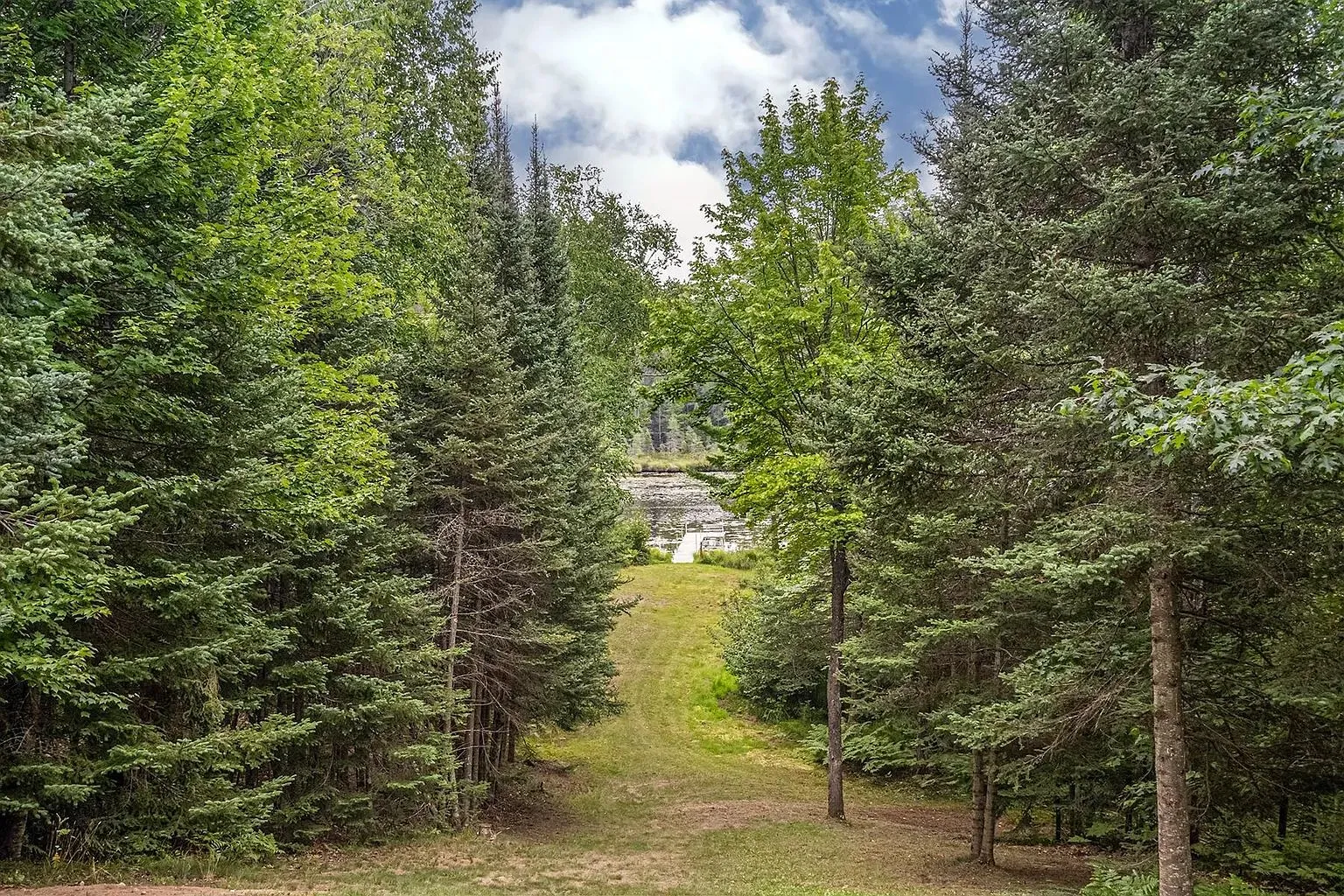
Everybody who comes up here with a musky rod wants the Eagle River Chain, and fair enough. But the water out our back door is the Sugar Camp Chain, and after a lot of mornings on it I would argue it is the better place to learn a musky: fewer boats, tighter water, and fish that have not seen a bucktail every day since June.
The water
What makes the Sugar Camp Chain good musky water?
The chain is a string of connected Northwoods lakes just south of Eagle River, around the little crossroads of Sugar Camp. What it gives you is variety inside a short run: shallow weedy bays, narrows where current pulls bait through, hard-bottom points and bars, and deeper basins the fish slide out to when the sun gets high.
That matters because a musky is not really a lake fish, it is an edge fish. It wants a line to sit on — the outside weed edge, the lip of a bar, the mouth of a channel — and bait funneling past it. On a chain this size you can fish four or five different edges before lunch without ever trailering the boat. And it is quiet: on a July Saturday the big chain is a parade, while here you will often have a whole bay to yourself.
Where to start
Where should you start looking?
The narrows
Anywhere one lake squeezes into the next, bait stacks up and musky sit on the seam. First place we go in the morning, every time.
Outside weed edges
Find where the cabbage and coontail stop and the bottom drops away, then work that line in both directions. Ninety percent of our fish come off an edge like this.
Wood and points
Fallen timber along a steep bank and hard-bottom points off the main basin both hold fish, especially on a chop when the light is broken up.
If you are new to the chain, resist the urge to run everywhere. Pick two bays and one set of narrows and learn them properly. Our boat landings guide covers getting on the water, and the fishing page has the wider picture.
Late fall
Why is late fall the window everyone waits for?
Because the fish get honest. Once the water cools and the weeds lay down, musky stop being scattered and start feeding hard ahead of freeze-up, and the biggest fish in the lake becomes a realistic thing to hook rather than a story.
Late-season fishing is slower work — heavy rubber worked deliberately, or live suckers on a quick-strike rig over deeper structure near the last green weeds. Fewer casts, bigger intentions. Dress for it properly, because an open boat in November up here is colder than the thermometer suggests. If the water has already turned over, our notes on fishing through turnover are worth a read first.
One honest caveat: musky season dates, size limits and release rules are set by the Wisconsin DNR and they do change. Check the current regulations before you launch rather than trusting anything you read last year.
In the boat
What should you bring, and what should you leave behind?
Bring release gear before you bring more lures: a net big enough to hold the fish in the water, long-nose pliers, a jaw spreader, and hook cutters you have actually tested. A musky that goes back strong is the whole point up here, and that is decided in about forty seconds at the side of the boat — so have it all within arm's reach before the first cast. Past that, a heavier rod than feels reasonable, a leader on every bait, and polarized glasses so you can see the edge you are fishing. And learn the figure-eight at the boat; a surprising number of fish here show up in the last three feet of the retrieve.
What to leave behind is the hurry. The old line about the fish of 10,000 casts is a joke with some truth in it. Plan a few days, fish the low light at both ends of them, and treat the middle of the day as time for a sandwich on the dock.
Where to stay for a musky trip
Fish it from the dock — The Grandy Dandy sits right on the Sugar Camp Chain with a private dock and a sauna for the end of a cold day, and The O.G. is on Lake Arbutus with its own dock, hot tub and kayaks. Both are open year round. Fall weekends go quietly, but they do go — book ahead.
Good to know