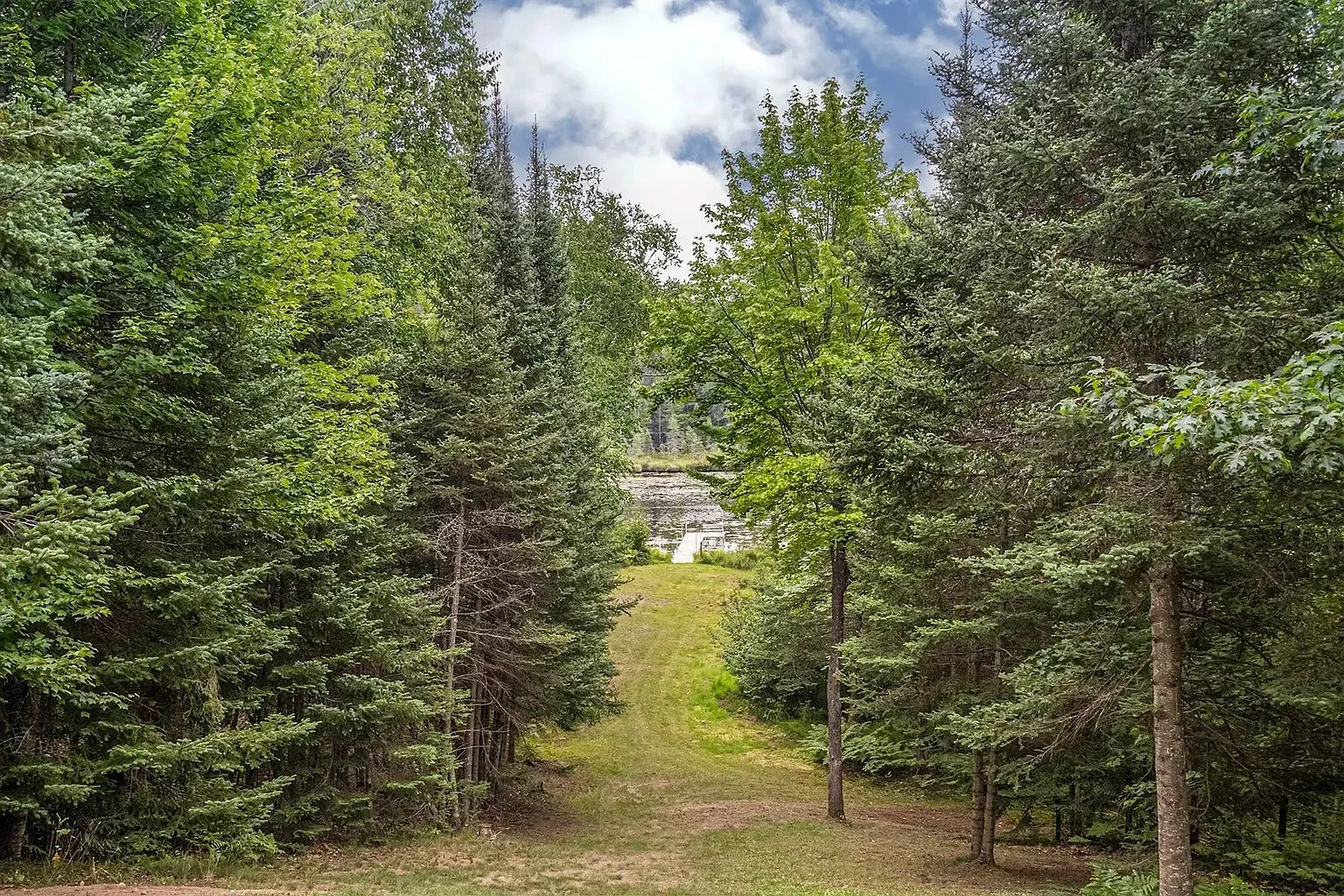
There's a reason anglers drive hours to fish our corner of Wisconsin: this is musky country, and the Eagle River Chain of Lakes — the world's largest inland chain of freshwater lakes — is one of the best places anywhere to chase them. They've earned the nickname “the fish of ten thousand casts” — but hooking your first one off the dock is a real Northwoods thrill, and you don't have to be an expert to start.
The basics
What makes the Eagle River Chain such good musky water?
The muskellunge — musky for short — is the apex predator of these lakes and the official state fish of Wisconsin. They grow long and heavy here, and the Eagle River Chain gives them everything they want: dozens of connected lakes, miles of weed edges and drop-offs, and shaded bays all linked by navigable channels. From the dock at either cabin you can idle out to water that would take days to fish completely. Musky are ambush hunters, so you're not blanketing the lake — you're working the edges where they wait.
Where to start
Where do you actually find them?
Start with structure. Musky hold along weed lines, points, and the edges of drop-offs, and they love the seams where shallow water tips into deep. On the chain, the channels between lakes and the mouths of bays are classic ambush points — current and baitfish funnel through, and big fish sit and wait. Early in the season, look shallow and warm; as summer settles in, the bigger fish slide out to deeper weed edges and humps. If you're new here, our fishing guide points you toward spots worth your first casts, and a half-day with a local guide is the fastest way to learn a chain this size.
Gear & tactics
What gear and tactics do you need?
Rod, reel & line
A heavy seven-to-nine-foot musky rod, a sturdy baitcaster, and heavy braided line. These fish are big and toothy, so a fluorocarbon or wire leader isn't optional here.
Lures that work
Big bucktails, topwater baits, and large soft plastics are the Northwoods staples. Musky eat big, so don't be shy — oversized lures tend to out-fish small ones up here.
The figure-eight
Musky famously follow a lure right to the boat. At the end of every cast, sweep your lure in a wide figure-eight beside the boat — plenty of fish strike right there.
The other essentials are your release tools — long pliers, a hook cutter, and a cradle or large rubber net. Handling a fish this powerful goes smoothly when everything is out and ready before you hook up, keeping both you and the musky safe.
When to go
When is the best time to fish for musky?
The whole open-water season has its moments. Musky season in northern Wisconsin typically opens in late spring and runs through late fall — always check the current Wisconsin DNR regulations for exact dates and size limits before you head out. Summer is excellent at dawn and dusk, when the water's calm and the light is low. But ask most regulars and they'll point you to fall: as the water cools, the biggest fish feed hard before winter. Cool, gray, blustery days that feel like bad weather are often the best musky days of all.
Make a trip of it
Plan the rest of the day
Musky fishing rewards patience, so you'll want somewhere good to land afterward. A Friday fish fry or a classic supper-club dinner is the perfect reward — our where-to-eat guide stars the favorites. And when your casting arm gives out, the firepit and hot tub are waiting.
Where to stay for a musky trip
Both of our cabins put you right on the water with a dock to launch from — The O.G. on Lake Arbutus and The Grandy Dandy on the Sugar Camp Chain, each with kayaks and a hot tub to thaw out in after a long day of casting. Wake up, pour your coffee, and be on the water before anyone else. Fall musky weekends fill up early — book ahead.
Good to know