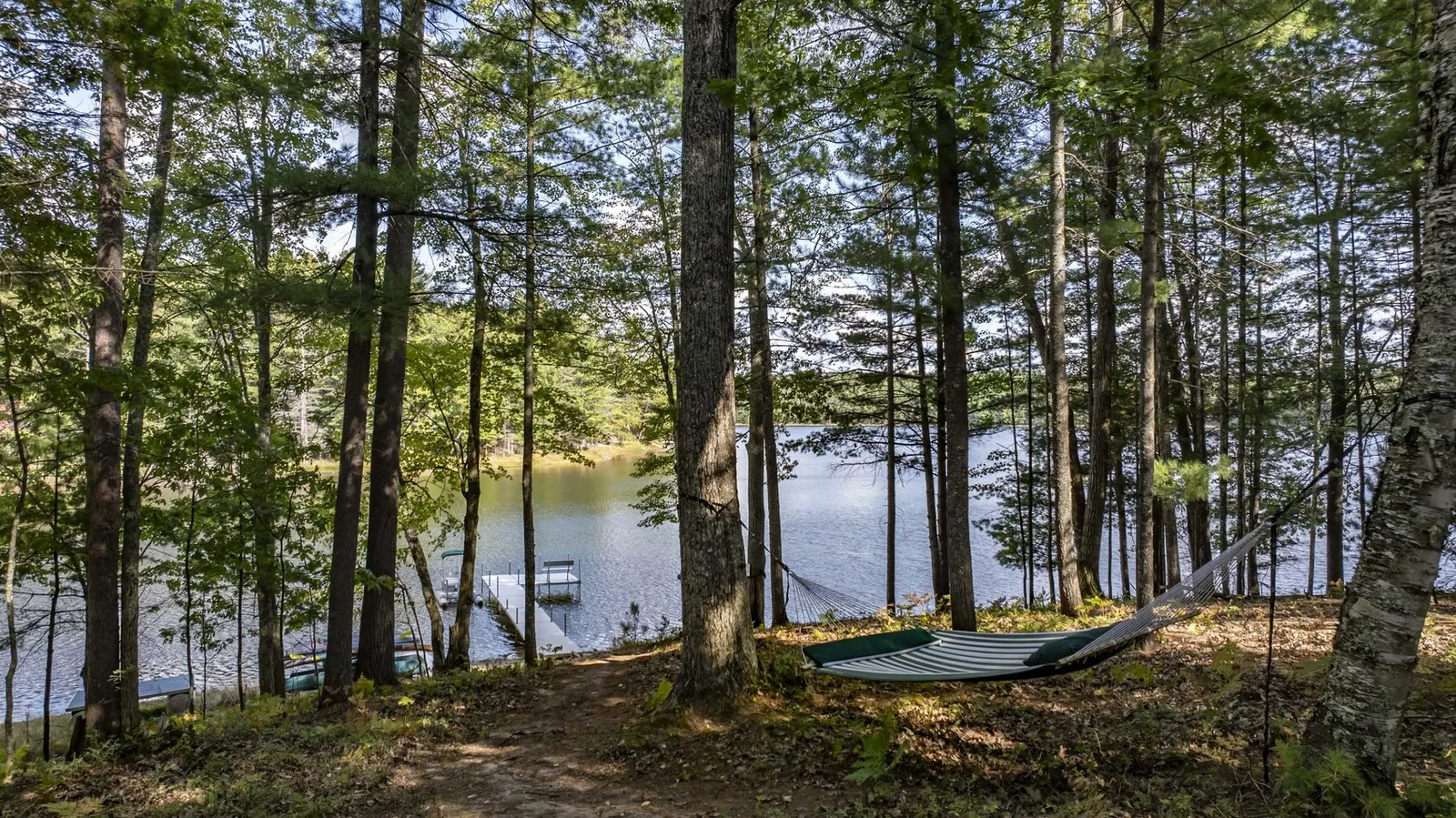
Musky get the posters and the bar stories, but the fish most guests actually catch off our docks is the largemouth bass. They are forgiving, they are everywhere on the Eagle River Chain, and they will eat something thrown badly by a nine-year-old on their first trip north. If you want a morning that ends with fish rather than stories about fish, start here.
The water
Where do they actually live?
Largemouth are a cover fish. On the Eagle River Chain and the Sugar Camp Chain that means the soft, green, tangled places a musky angler usually motors straight past: shallow back bays, the inside edge of a cabbage flat, a blowdown lying half in the water, the shade under a neighbor's pontoon. Find cover sitting next to slightly deeper water and you have found a bass.
The chains are full of this. Because the lakes are connected by thoroughfares, the bays and narrows warm faster than the main basins, and those warm pockets stack fish. If a spot looks fishy and weedy and a little bit awkward to cast into, it is probably the right spot.
Right now
What changes when the water cools?
September and October are a genuinely good stretch, and an underrated one. As the nights get cold, most of the weed growth dies back but a few beds stay green, and those green beds hold everything: baitfish, panfish and the bass eating them. Rather than spreading out across an entire shoreline, the fish concentrate, which makes them easier to find than in August.
Slow down a little as the water drops. A bait that looked frantic in July often works better in October fished with long pauses. Cloudy, breezy afternoons tend to beat the bluebird mornings this time of year, which is a nice excuse to drink your coffee slowly.
Early fall
Bass are still shallow and aggressive. Work weed edges and wood with something that moves water and covers ground.
Late fall
The remaining green weeds and the first drop-off next to them are the whole game. Fewer spots, bigger average fish.
Summer mornings
First light and last light over shallow cover. Midday, move out to the deeper edge or go swim instead.
Spring warm-ups
The shallow, dark-bottomed bays warm first and pull fish in. Look for the pockets out of the wind.
Getting on them
Do you need a boat?
No, and this is the part guests are usually surprised by. Bass live under docks, which means the dock you are standing on is structure. Cast parallel to it rather than straight out, and fish the shaded side.
A kayak is the real cheat code though. It draws almost no water, it is quiet, and it gets you into the skinny backs of bays a bigger rig has to leave alone. Both The O.G. on Lake Arbutus and The Grandy Dandy on the Sugar Camp Chain include kayaks, so a bass morning costs you nothing but getting up.
Wisconsin fishing licenses are required for adults, and size and bag rules change from time to time, so check the current Wisconsin DNR regulations before you keep anything. Most of the bass on the chain get released anyway.
Next
Where to go from here
Once you have the bass figured out, the rest of the chain opens up. Our smallmouth guide covers their rockier, harder-fighting cousins, the musky guide is there when you want to chase the fish of ten thousand casts, and the fishing page pulls the whole chain together. Then go find a fish fry.
Where to stay for a fishing weekend
Both cabins put you on the water with a dock, kayaks and a hot tub for afterward — The O.G. on Lake Arbutus and The Grandy Dandy on the Sugar Camp Chain. Fall weekends are quiet up here, but they do fill.
Good to know