Ice fishing is the most forgiving way we know to get a child outside in the middle of a Northwoods winter. You are standing on a flat white field a hundred yards from the truck, there is no casting to learn and nothing to fall out of, and the whole thing can be over in two hours if it needs to be. Here is how we take kids out on the Eagle River Chain and the Sugar Camp Chain, and what we have learned about keeping it fun.
Picking the day
When is the ice right for taking kids out?
Later than it is right for you. Adults will walk out on the first safe ice with a spud bar and good judgement; with kids along we wait until the ice is thick enough that nobody has to think about it, and then we pick the weather rather than the date. A calm, bright day in the mid-twenties beats a still morning near zero every single time, because wind and cold are what end these trips, not boredom.
Before you step out on anything, read our notes on reading first ice. On a chain of lakes the channels between the lakes carry current all winter and stay thin long after the rest looks locked up, so with children along we stay well away from them and off any ice we have not checked ourselves. If you would rather not make that call at all on your first winter up here, go out with someone who fishes the chain regularly.
Where to go
Where should you set up with kids on the chain?
Close to shore, in a sheltered bay, somewhere you can see the truck. A back bay gives you a treeline to break the wind, shallow water with plenty of bluegills and perch in it, and a short walk back when someone has had enough. Depth is not the point here. A steady nibble in eight feet of water is worth more than a trophy two miles out.
Panfish are the right target for exactly this reason: they bite often, they bite all day, and a child who catches six small bluegills has had a better morning than one who waited silently for a walleye. Our early-ice crappie guide has more on where the panfish schools sit once winter settles in.
Sheltered back bays
A treeline to block the wind, shallow water full of panfish, and a short walk to the truck. The best place to start, every time.
Near the access
Fish within sight of where you parked. Nobody wants to carry a cold, tired child across a lake, and you will not have to.
Weed edges
Bluegills and perch sit in and against whatever green weed is left. Steady small bites, which is the whole goal with kids.
Not the channels
Current keeps channel ice thin all winter. Good fishing for adults who know them, no place to bring children.
Gear
What do you actually need to bring?
Less tackle than you think and more clothing than you think. One short rod each, small jigs, waxies, an auger, a spud bar and a couple of buckets to sit on will cover the fishing. What actually decides whether you stay out is the rest: boots a size roomier than their shoes with wool socks, snow pants, a spare pair of mittens so there is always a dry pair, a hat over the ears, and a thermos.
Two things earn their place beyond that. A sled to drag the gear, so small hands are not carrying anything, and a flasher or a camera if you have one, because watching fish swim up to the jig turns the waiting into the interesting part. A shelter is a genuine luxury with kids rather than a nicety. If you have one, you will stay out twice as long.
How we do it
What does a morning on the ice with kids look like?
Out mid-morning once the day has taken the edge off, two or three holes drilled close together so everyone is within arm's reach, and no plan to move. One rod gets set and watched, the other gets jigged, and whoever is cold sits on the bucket with the thermos for a while. We call it before anyone asks to go in — two hours is plenty for a first trip — and the walk back gets talked about more than the fish do.
Keep your regulations current before you keep anything, and check the Wisconsin DNR rules on who needs a license. When the kids are ready for longer days, the ice fishing guide covers shelters and the full-day version, and the fishing page has the broader lay of the land on both chains.
Where to stay with the family
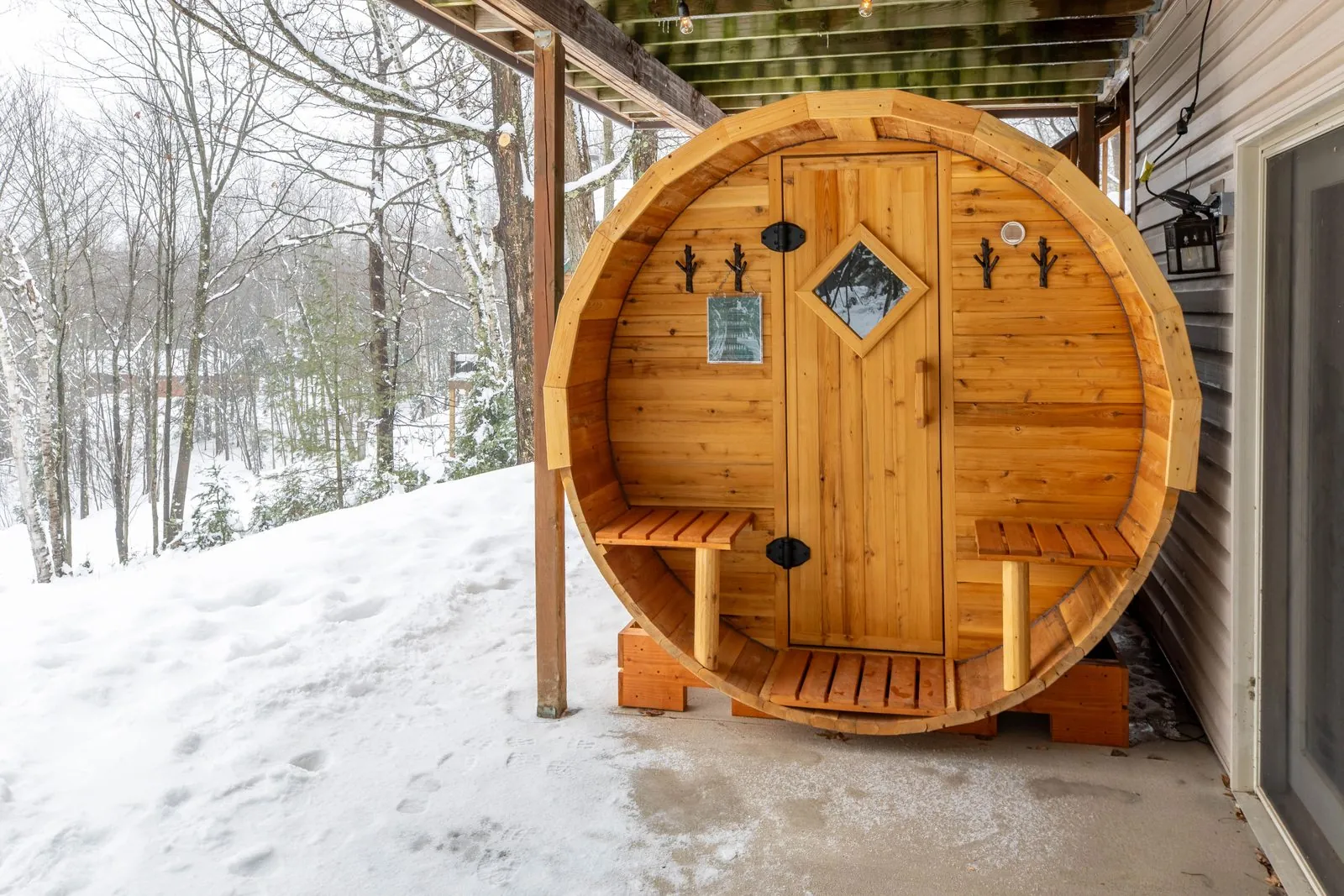
Both cabins are open all winter, both sit on the water, and both have somewhere to dump an armload of wet snow gear — The O.G. on Lake Arbutus and The Grandy Dandy on the Sugar Camp Chain, which also has a bunk room, a game room and a cedar barrel sauna for after the ice. Being able to walk back indoors in five minutes is what makes a winter trip with kids work.
Good to know