Walleye are the fish that get people out of a warm cabin and onto a frozen lake before the sun is up, and the Eagle River Chain is one of the better places in Wisconsin to look for them. Lakes stitched together by narrows and short river runs mean a lot of structure under the snow, once you learn how the chain behaves in winter.
Timing
When does the walleye bite turn on?
The ice season here comes in three acts, and walleye behave differently in each one. Early ice is the window everyone waits for: fish are still shallow, still thinking like late-fall walleye, holding on the first weed edges in surprisingly little water. It also demands patience, because safe ice shows up on shallow bays and small connecting lakes well before the big open basins.
By midwinter the bite narrows to the edges of the day, and a flasher earns its keep: you are looking for fish pinned to one depth rather than roaming. Then late ice opens things up again — longer light, warmer water at the inlets, walleye staging for spring. Our month-by-month fishing guide puts that rhythm alongside the rest of the year.
Whatever the month, the reliable pattern is the hour either side of sunrise and sunset. Walleye eyes are built for low light, and on a bluebird day the middle hours can feel like a different lake entirely.
Finding fish
Where do walleye hold under the ice?
Think of the chain as a set of edges. Walleye winter close to the line where something changes — a weed flat dropping into a basin, a point running out into deeper water, a narrows pinching current between two lakes. Find one of those and you have found the only place worth drilling.
The narrows and short river stretches between the lakes are the chain's signature winter feature. Moving water keeps oxygen up and bait moving, and walleye stack on the soft inside turns where they can sit out of the push and watch food go by. Those are also the spots to respect most on foot: current thins ice from underneath, where you cannot see it.
If you are choosing between waters, the Sugar Camp Chain and the Eagle River Chain fish differently — the Sugar Camp side is quieter, smaller water, which helps when the wind is up.
Tactics
Tip-ups, jigging, or both?
The honest answer is both, worked together: tip-ups cover water and hold a still bait in front of a fish that will not chase, while a jigging rod finds the ones that will. Our tip-ups versus jigging breakdown goes deeper on the trade-off.
Spread the edge
Line tip-ups along one depth contour instead of scattering them. When a flag goes, you have learned the depth — move the others to match.
Jig between
A spoon or jigging minnow pulls fish from a distance. Work it high and hard, then let it sit dead still when something shows up.
Go quiet
On clear midwinter ice, drill before the evening window rather than during it, and keep the boots and chatter down once the light goes soft.
Before you go
What do you need to bring?
Start with the ice itself. Nobody can tell you from a desk whether a spot is safe on a given morning — thickness varies across one lake, and it is always thinner near inlets, outlets, narrows and springs. Carry a spud bar and check as you walk, bring ice picks, go with somebody, and ask a local bait shop what the ice is doing that week.
Beyond that: a Wisconsin fishing license, the current regulations for the water you are on, an auger, a bucket to sit on, bait kept from freezing, and more layers than feel necessary in the truck. Our boat landing guide covers the access points, and the broader ice fishing guide covers the rest of the sled.
Where to stay for a hard-water weekend
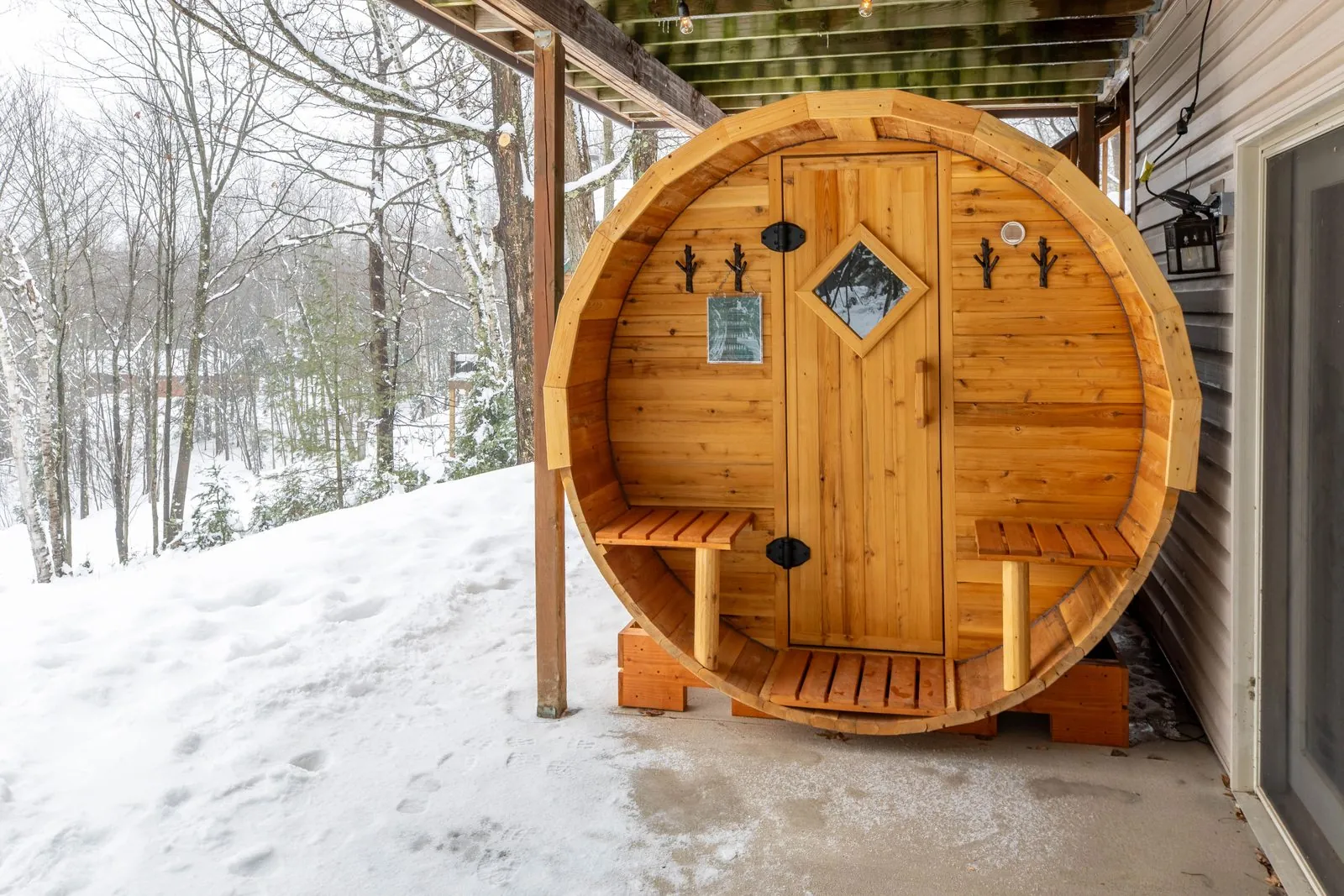
Both cabins are open all winter and built for coming in cold. The O.G. sits on Lake Arbutus with a year-round hot tub and a log great room made for thawing out. The Grandy Dandy is on the Sugar Camp Chain with a cedar barrel sauna and a game room for the hours the bite is off. Either one puts you minutes from the ice instead of hours.
Good to know