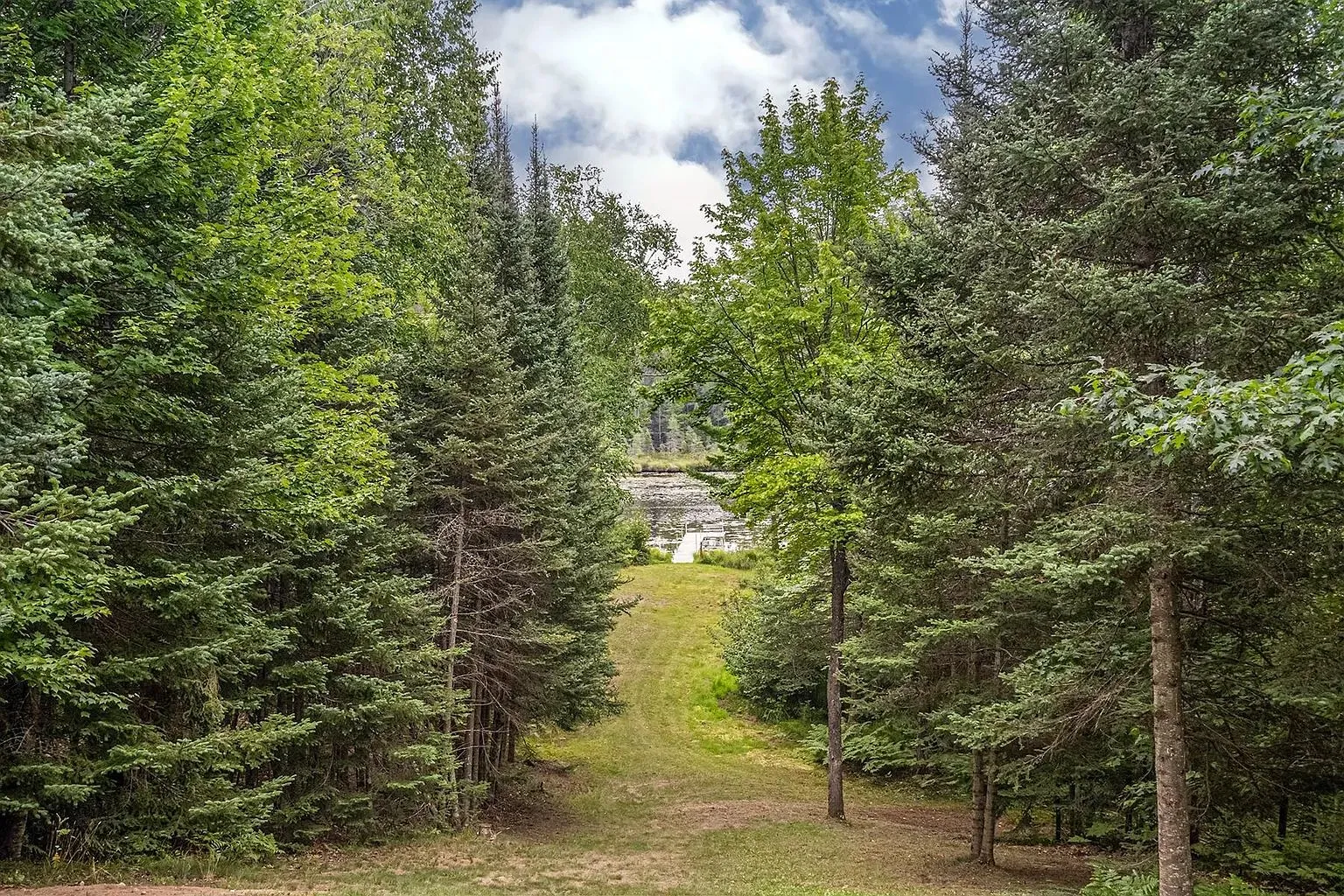
There is a strange few weeks every year when the Northwoods belongs to nobody. The boats are out, the snowmobiles are not running yet, and the Sugar Camp Chain sits there going quiet and glassy while everyone waits. Then the ice comes, the first holes get drilled, and the panfish bite like they have been waiting too. Here is how we think about first ice out our back door — and what to know before you walk out on it.
Timing
When does the Sugar Camp Chain actually freeze?
Ice-up here is a process, not a date. The shallow, sheltered bays skin over first, usually while the main basins are still open and steaming on cold mornings. A run of still, clear, cold nights is what builds hard black ice fast; wind and a warm afternoon undo a surprising amount of it. That is why two winters a week apart on the calendar can look nothing alike on the water.
The thing that makes this chain different from a single lake is the current. Sugar Camp is a string of lakes joined by narrows and channels, and moving water keeps ice thin long after the bays are safe. If you only remember one sentence from this guide, make it that one. Our ice-up guide walks through the same freeze pattern on the Eagle River Chain next door.
Safety
How do you judge the ice before you trust it?
Locals do not guess, and they do not trust what the ice looked like last weekend. They drill. A spud bar or an auger and a tape measure, checked as you walk out, is the whole method — clear ice is strong, cloudy or honeycombed ice is not, and slush on top means water is working underneath. Stay well off any narrows, inlet, spring hole or dock bubbler, go with somebody, wear a float suit or carry picks, and tell a person at the cabin where you are headed.
Nobody can tell you from a keyboard whether the ice is safe the day you arrive. Ask at a bait shop in town, look at where the local shacks are sitting, and if the answer is vague, that is your answer.
The bite
What is biting under first ice?
Panfish first
Bluegill, crappie and perch stack in the green weeds of the shallow bays right at first ice. Small jigs, waxies or plastics, and a light rod — this is the most family-friendly fishing of the whole winter.
Walleye at the edges
Work the deeper weed edges and breaklines at dawn and dusk. A jigging spoon on one line and a minnow on a deadstick a few feet away covers both moods.
Northern pike on tip-ups
Set tip-ups with sizeable minnows over a weedy bay flat and let them work while you jig. Pike are the reason first ice never gets boring out here.
Seasons and limits are set by the Wisconsin DNR and they do change, so check the current regulations for Oneida and Vilas counties before you drill. Musky stay closed through the ice season.
Where to start
Where do you begin on a chain this big?
Start shallow and start early. The first fishable ice forms in the back bays, which is exactly where the panfish are, so for the first stretch of the season you can have a good day without walking far from shore. As the ice thickens the fishing spreads out to the weed edges and deeper breaks, and by midwinter people are running sleds to main-lake structure.
For the open-water version of the same water, our fall fishing guide to the Sugar Camp Chain covers the bite that leads right up to freeze-up, and the Eagle River Chain ice fishing guide is the companion piece for the chain in town. The area guide and fishing page cover the rest.
Where to stay for first ice
Fishing out the door beats driving to it. The Grandy Dandy sits right on the Sugar Camp Chain with a cedar barrel sauna and a hot tub for the end of a cold day, and The O.G. on Lake Arbutus is the same idea an easy drive away. Both are open all winter, both have room for a gear-hauling crew, and both are a lot more pleasant than a motel at 6 a.m.
Good to know