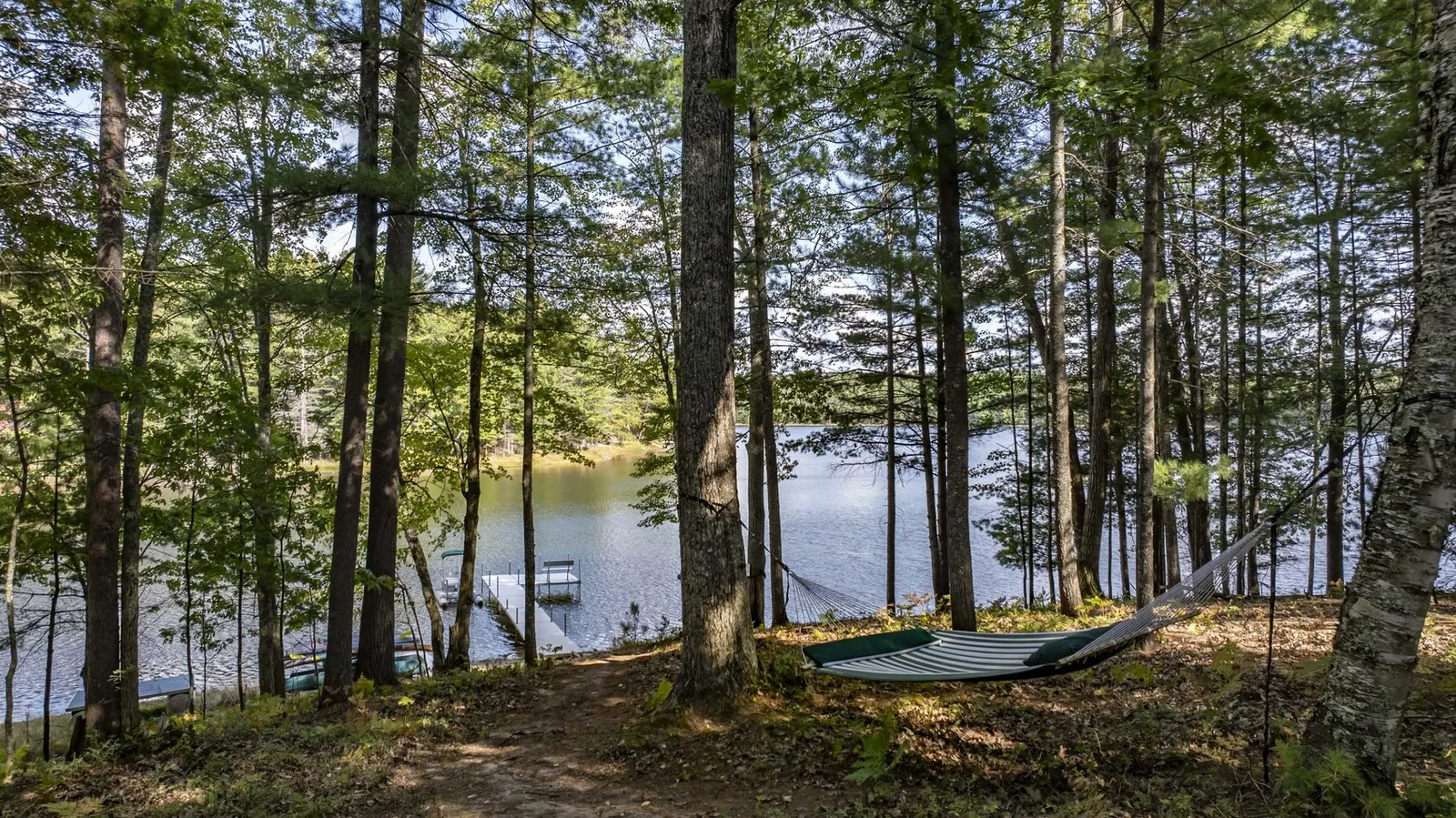
Fish the Northwoods long enough in October and you'll hit a morning where the lake just looks wrong. The water's gone the color of weak tea, there are shreds of dead weed drifting past the boat, and the spot that gave up fish all summer gives up nothing at all. That's turnover. It happens on every lake around Eagle River, it never lasts long, and once you know what you're looking at you can fish around it instead of driving home early.
The short version
What actually is fall turnover?
All summer a lake sits in layers. Warm, light water floats on top of cold, heavy water, with a narrow band between them where the temperature falls off a cliff. Those layers barely talk to each other, which is why your electronics show a hard line partway down and why fish stack along it.
Come autumn, the nights get long and the surface starts giving up heat. As that top layer cools it gets denser and begins to sink, and the layers squeeze together until the whole water column is close to the same temperature. At that point there's nothing holding the lake apart — a good blow mixes it top to bottom, dragging cold water, suspended sediment and a season's worth of decayed weed up through the middle. That mixing is turnover.
It isn't a disaster and it isn't permanent. It's the lake resetting itself for winter, and on the other side of it sits some of the best fishing of the year.
Timing
When does it happen on the Eagle River Chain?
Weather drives it, not the calendar — which is why no one local will give you a date. A stretch of cold nights followed by a hard wind can turn a lake over in a couple of days; a mild, calm autumn can drag the process out for weeks.
What's useful to know is that depth and shelter decide the order. Shallow, wind-open water cools fast and mixes early, often so gradually that you'd barely notice. Deeper, more sheltered basins hold their layers longer and then turn over later and harder. On a connected system like the Eagle River Chain, that's a gift: you can be sitting on a lake that's clearly mid-turnover with a neighbouring lake two weeks behind it, and the run between them takes minutes.
Reading the water
How do you know a lake has turned over?
You mostly diagnose it with your eyes and your temperature gauge before you diagnose it with the rod.
The water clouds up
Clarity drops noticeably. Sediment and broken-down weed that had been sitting on the bottom get stirred up through the whole column.
Debris on the surface
Bits of dead cabbage and coontail, foam lines, the occasional whiff of sulphur off the back of the boat. All of it came up from the bottom.
The thermocline vanishes
Surface temperature and deep temperature read nearly the same, and the hard line on your graph that you'd been fishing all summer is simply gone.
Fish go everywhere
Marks scatter across odd depths instead of holding to an edge, and they show no interest in anything. That's the tell that the lake is actively mixing.
Tactics
How do you fish a chain that's mixing?
Three things work, and they work in this order.
Move to a lake that hasn't turned yet. This is the whole advantage of fishing a chain rather than a single lake, and it's what most visiting anglers never think to do. If the basin you're on has gone murky, run to a shallower or more sheltered one and check the temperature. Our boat landing guide makes it easy to reposition without a long tow.
Find the green weeds. Most vegetation is dying back by now, but whatever's still standing and healthy is still making oxygen and still holding bait — and where the bait sits, the walleye and panfish aren't far off. Green cabbage in October is worth more than any number on a map.
Slow down and fish the wind. Neutral fish want an easy meal, so downsize, work more deliberately, and give a spot longer than feels comfortable before you move. Then spend your effort on the windward shore and on hard edges — points, rock, gravel, the narrows between lakes — where the water is stirred and the food gets pushed.
And then wait it out. Once the mixing settles and the chain evens off cold and stable, the fish reorganise fast. Those last weeks before ice are when the big musky feed hardest of the whole year, and a turnover week is simply the price of admission. There's more on how the season unfolds in our fishing overview.
Where to stay for the fall bite
Both cabins are open year-round with the lake out the door, so you can check the water over coffee and make the call before you hitch up — The O.G. on Lake Arbutus and The Grandy Dandy on the Sugar Camp Chain, each with a private dock, a hot tub for after, and kayaks if the wind shuts the big water down. Autumn weeks go quietly, but they do go.
Good to know