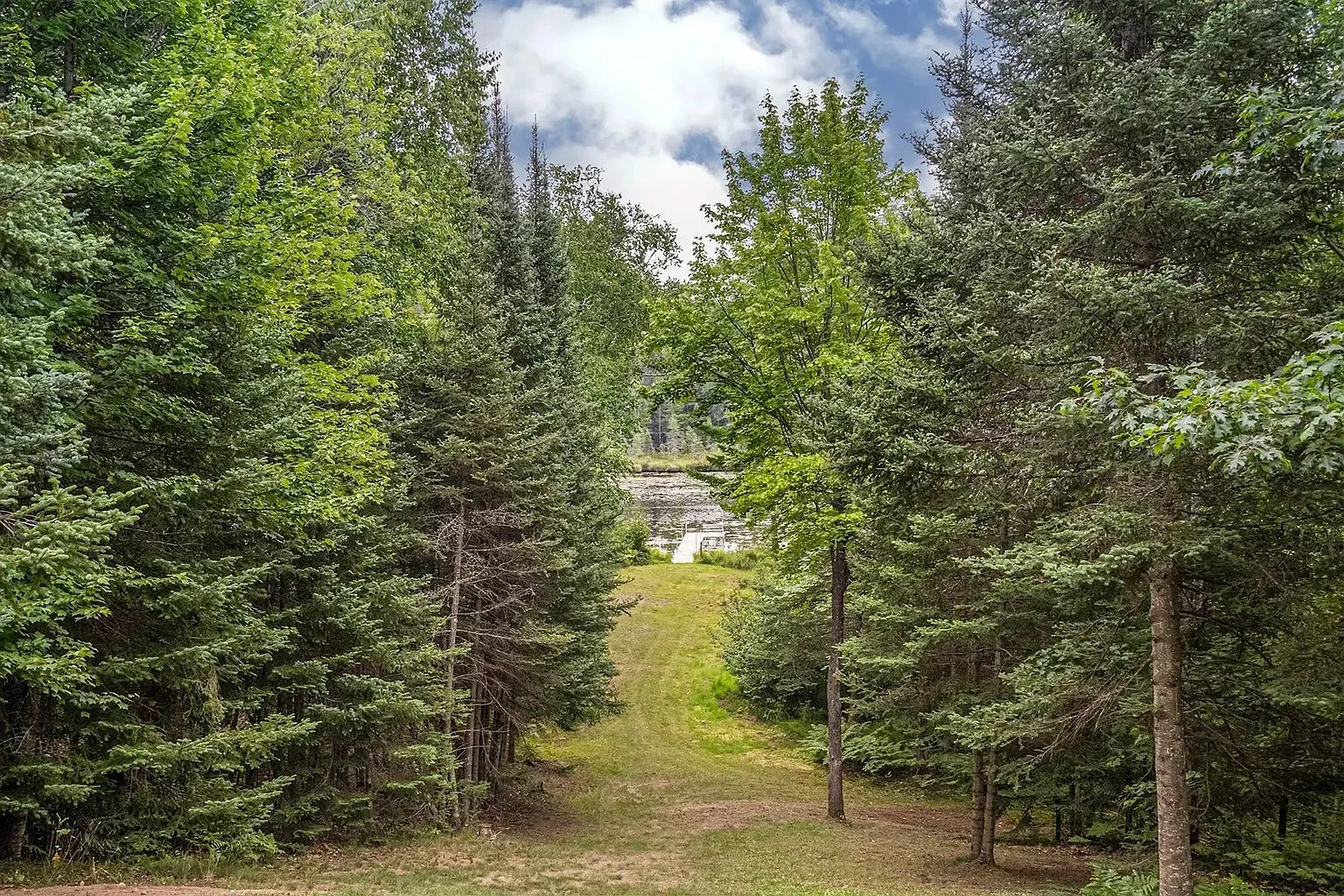
Most of what gets written about fishing around Eagle River is about the big Eagle River Chain. But the water out our back door at The Grandy Dandy is the Sugar Camp Chain, and autumn is when it quietly becomes the better place to be — five connected lakes, almost no traffic once the summer boats come out, and fish that feed hard right up to the ice.
The water
What exactly is the Sugar Camp Chain?
It is a boatable five-lake chain southeast of town, about fifteen minutes from downtown Eagle River. The basins are joined by narrows and thoroughfares, so in a shallow-draft boat you can move between them and follow fish through the day instead of being stuck on one piece of water. There is a public launch off County Highway D, and if you are staying with us at The Grandy Dandy there is a private dock at the bottom of the yard.
What makes it good in fall is what makes it modest in July: it is smaller and less famous than its neighbour. By October you will often have a basin to yourself.
The fish
What is biting once the water cools?
The chain holds the full Northwoods spread, and cold water changes which of them is worth your day.
Walleye on the edges
Autumn walleye pull tight to hard breaklines and the mouths of the narrows. Slow is the word — a jig dragged rather than snapped. Our walleye guide goes deeper on presentation.
Musky in their best weeks
Late fall is when the biggest fish of the year get caught in this county. Fewer follows, bigger fish, colder hands. Check current DNR season dates before you plan a trip around it.
Northern pike shallow again
Pike come back up onto the remaining green weed as the water drops through the fifties, and they are the most willing fish on the chain in a cold snap.
Panfish and bass
Crappies school off the deeper holes and are superb eating this time of year. Smallmouth hold on rock; largemouth sit on whatever cabbage still stands.
Reading it
Where do the fish go on a chain in fall?
A chain fishes differently from a single lake, and the difference is the connections. As the water cools, the weed that held everything through summer dies back and stops producing oxygen, so fish leave it. They end up in three kinds of places: the deep edges where the last living weed meets open water, the rock and gravel that holds heat a little longer, and the narrows between basins, where even a slight current keeps bait moving and pins predators in a spot you can actually find.
The narrows are the shortcut. If you have an hour and no idea where to start, fish the connections. And if the whole chain has just turned over and nothing is making sense, that is a real thing with a real explanation — we wrote about fishing a lake that has turned over separately.
Be sensible
How do you fish safely once it gets cold?
Cold water is the part of fall fishing people underestimate. By late October the chain is cold enough that going in is a genuine emergency rather than an inconvenience, and there are far fewer boats around to notice. Wear the life jacket rather than sitting on it, keep dry clothes in a bag in the boat, and tell someone at the cabin which basin you are on and when to expect you.
Two smaller things matter more than they sound: the days get short fast up here, so give yourself an extra half hour to get off the water, and watch the wind rather than the thermometer.
Where to stay for the fall bite
Both cabins are open year-round with the water out the door, so you can look at the lake over coffee and make the call before you load the boat — The O.G. on Lake Arbutus and The Grandy Dandy on the Sugar Camp Chain, each with a private dock, a hot tub for afterwards, and kayaks and paddleboards for the calm mornings. Autumn weeks here go quietly, but they do go.
Good to know