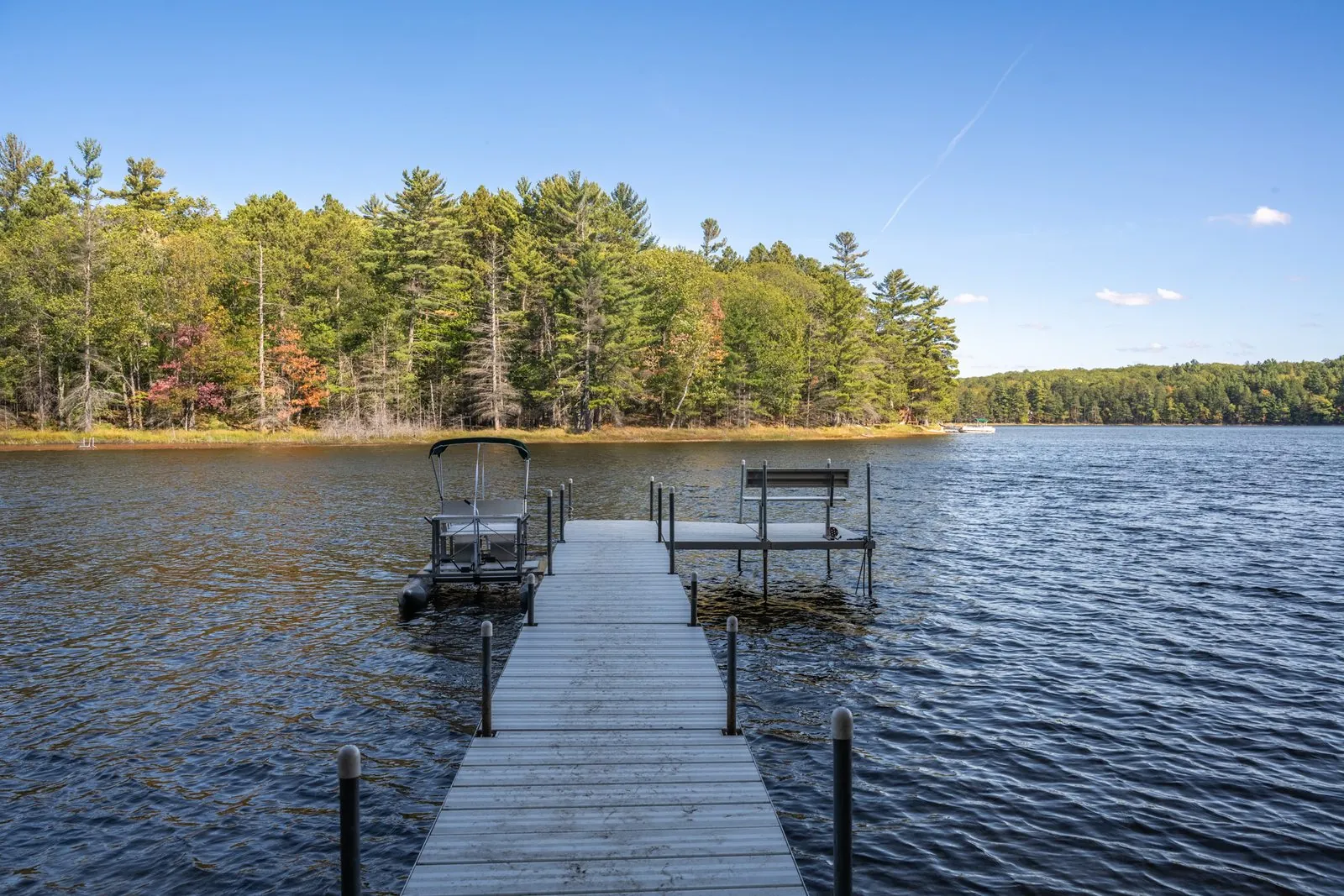
Ask the guides around here which season they'd pick if they only got one, and a surprising number say fall. The water cools, the fish feed like they know what's coming, and the boat traffic that fills the chain in July simply evaporates. Fall fishing near Eagle River asks a little more of you — warmer layers, shorter days — and tends to give a lot more back.
The short version
What changes when the water cools?
Everything, really. Through the summer, fish spread out, suspend in deep water, and get picky. As surface temperatures fall through autumn, that whole pattern unwinds. Baitfish pull toward green weed edges and rock, predators follow them, and fish that spent August sulking in forty feet of water move up shallow enough that you can actually reach them.
They're also eating with real purpose. Cold-water fish put on weight ahead of a long winter under the ice, which is why fall has a reputation for fewer bites but bigger ones. You may go an hour without a hit and then have the best fish of your year eat a bait ten feet from the boat.
The other thing that changes is the lake itself. Docks come out, cabins go quiet, and on a Tuesday in late October you can have a whole bay of the world's largest inland chain of freshwater lakes entirely to yourself.
On the water
What's actually biting?
Musky
The headline act. Late fall is when the biggest fish of the season get caught — slower presentations, bigger baits, and a lot of patience. Our musky primer covers the basics.
Walleye
They feed hard as the water drops and push onto rock and gravel. Low light is your friend: the last hour of daylight often does the heavy lifting.
Smallmouth bass
Autumn smallmouth school up tight on rock and hard bottom. Find one and there are usually more, and they fight well above their weight in cold water.
Panfish & pike
Crappie and bluegill stack in deeper holes and are a fine way to keep kids busy. Northern pike stay willing right through to freeze-up.
Timing
When should you actually go out?
Fall flips the summer schedule. Instead of dawn patrol and then off the water by nine, the best stretch is often late morning through late afternoon, once the sun has put a degree or two back into the shallows. If you like to sleep in on vacation, this is your season.
Weather matters more than it does in July. A warm, stable stretch before a front tends to fish beautifully; a hard cold snap can shut things down for a day while everything resets. Wind pushing into a shoreline is worth chasing — it stacks bait, and the fish know it.
As for the calendar: the bite builds through September, peaks for many anglers as the hardwoods turn, and holds until the lakes start to lock up. If you're already planning a fall color trip, you're arriving at a good moment for both.
Before you go
What should you bring?
Dress in layers, and bring more of them than you think — twelve miles an hour on the water in October feels nothing like standing on the dock. A windproof outer layer, a warm hat, and a spare pair of gloves that can get wet are the three things people most often wish they'd packed. A life jacket that fits over all of it matters, because cold water is genuinely unforgiving.
Everyone 16 and older needs a Wisconsin fishing license, easy to buy online or at shops in town. Open seasons, size limits and bag limits vary by species and sometimes by individual water, so it's worth a look at the current Wisconsin DNR regulations before your first cast. If you'd rather shortcut the learning curve on unfamiliar water, a half-day with a local guide is money well spent — our fishing page has more on the lakes we know best.
Where to stay for a fall fishing trip
Both cabins put you on the water before your coffee cools. The O.G. on Lake Arbutus and The Grandy Dandy on the Sugar Camp Chain each come with a private dock, kayaks, and a hot tub that feels like a reward after a cold afternoon of casting. Fall weekends are quieter up here, but they still book — give yourself some runway.
Good to know