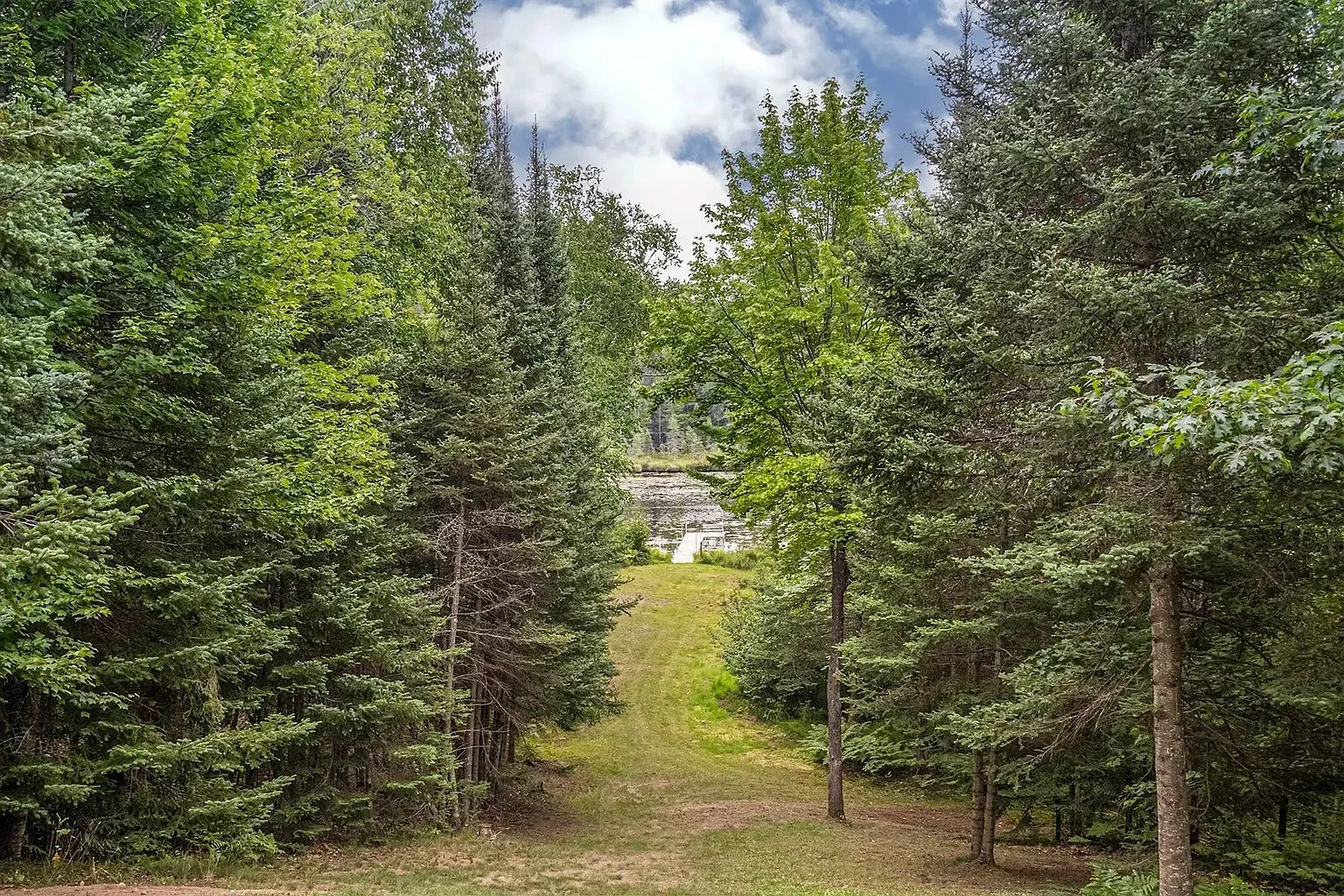
The question we get almost as often as “where are the fish”: where do I put the boat in? The landing is the first five minutes of a trailering trip, and the difference between a smooth start and a sour one is usually just knowing what to expect before you back down the ramp. Here is how launching works on the Eagle River Chain and the Sugar Camp Chain.
Getting on the water
Where are the landings?
Closer than you think. The Eagle River Chain is a long string of connected lakes with the town in the middle of it, and most carry some form of public access. The Sugar Camp Chain, southeast of town, works the same way on a smaller scale.
What changes from lake to lake is the kind of access. Some landings are paved, with a pier and room for a dozen trailers. Others are a gravel slope with space for three rigs and no dock. A few are carry-in only — perfect for a kayak, impossible for a twenty-foot pontoon. The Wisconsin DNR publishes public boat access for each lake, and five minutes on those pages before you leave home tells you which kind you are driving to.
At the ramp
What does a Northwoods landing actually look like?
Nothing like a big-city marina, and that is the charm.
The ramp
Short and steeper than you expect, often with a soft edge where the gravel gives way. Back down slowly and keep your rear wheels on the hard surface.
Trailer parking
Limited almost everywhere. On a bright Saturday the popular landings fill early, so go at first light or have a second choice in mind.
The staging area
Rig the boat before you get on the ramp — plug in, straps off, gear loaded. The ramp is no place to hunt for life jackets.
Before you pull away
What has to happen at the landing, every single time?
Wisconsin's invasive-species rules are not optional and they are not complicated. Before you leave a landing you must remove all plants, animals and mud from boat, trailer and gear; drain all water from livewell, bilge, motor and bait containers; and never move live fish away in water. Inspect, drain, dry.
On a connected chain it matters more than usual, because water that moves between lakes carries whatever is in it. Two minutes at the trailer is what keeps these lakes the way they are.
Planning the day
Can you fish the whole chain from one launch?
To a surprising degree, yes. The lakes are joined by natural thoroughfares, so a single launch opens up miles of water — it is why the musky fishing here has the reputation it does. Our boating guide covers what a day of running the chain looks like.
The caveat: a few thoroughfares are shallow and a couple run under low bridges. Pull up a chain map, know your boat's draft and height, and pick the loop that fits rather than finding out mid-channel. Our fishing page and the area guide have more on how the water lies.
This season
What changes about launching in the fall?
Late September through the end of October is the best launching of the year. The summer traffic is gone, and the landings that were full at 8 a.m. in July sit half empty.
Two things to respect. The water is cold now, and a slip at the ramp in October is a different event than a slip in July — wear the life jacket from the moment you step in. And landings start closing as freeze-up approaches, so late in the season, confirm yours is still open rather than assuming.
Or skip the landing entirely
Both cabins come with their own dock and kayaks — no trailer, no ramp, no queue. The O.G. on Lake Arbutus and The Grandy Dandy on the Sugar Camp Chain: tie your boat up out front, or take a kayak off the rack and go.
Good to know