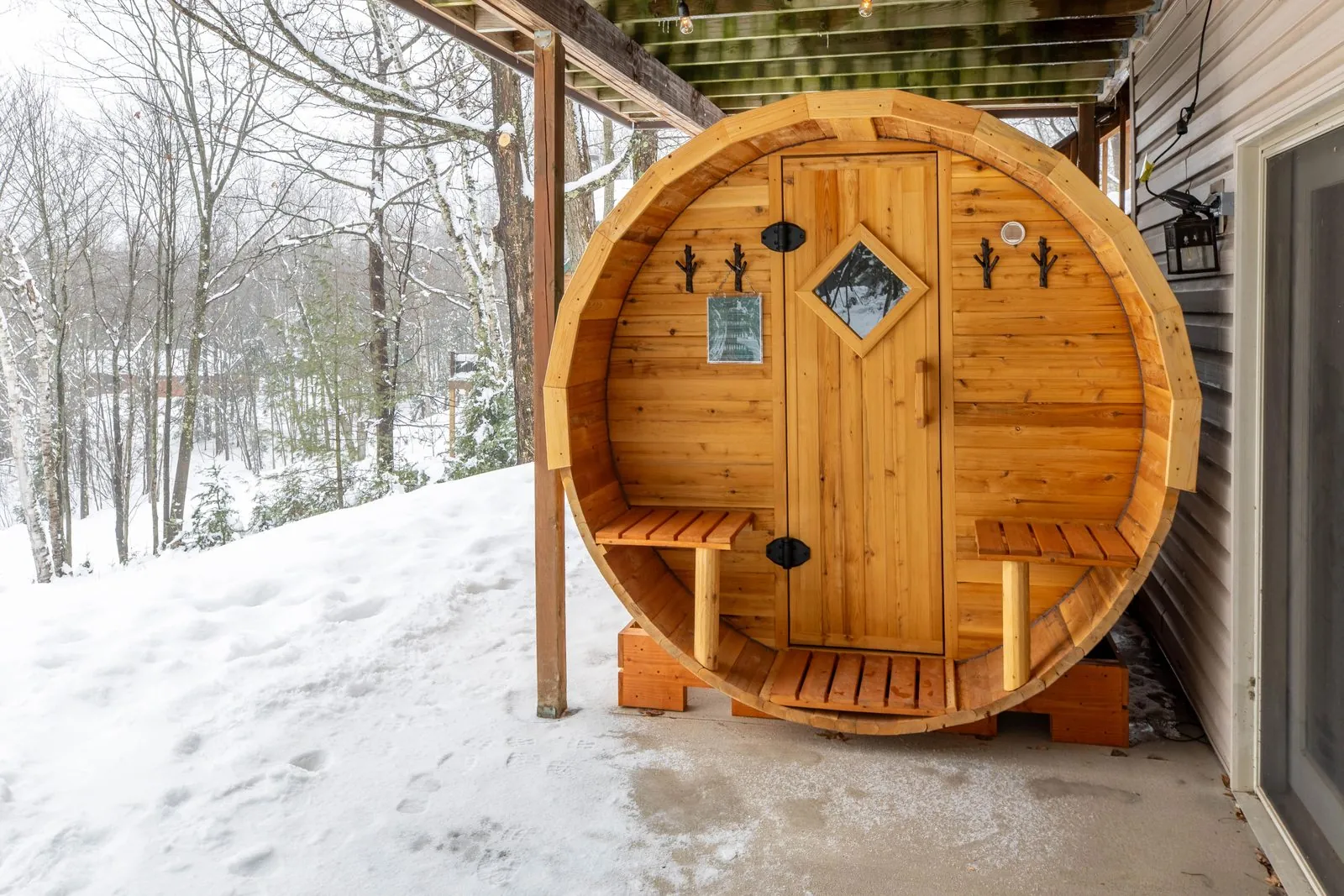
Every winter we get the same message a day or two before check-in: is the drive up going to be bad? Fair question if you have never done it. The honest answer is that the Northwoods handles snow better than almost anywhere you are driving from, because up here it is not an emergency — it is just Tuesday. Plows are out early, the highways stay open, and the last stretch is one of the prettiest drives in Wisconsin.
The route
Which way do you come in?
Almost everyone funnels onto one of two roads for the final leg. US 45 runs north and south and drops you straight into downtown Eagle River, which is the usual approach if you are coming up from Milwaukee, Madison or Chicago by way of Rhinelander. Highway 70 crosses east and west and is the one you want if you are coming over from Minocqua or in from the Michigan side.
Both are state highways, which in winter is exactly what you want: first cleared, last left alone. Heading out to The Grandy Dandy on the Sugar Camp Chain, you turn off onto county and town roads for the last few miles. Those are plowed too — just a beat later, and usually with packed snow left on top. Plan on the final miles taking longer than the app thinks.
Conditions
What are the roads actually like?
Packed snow and a glaze of ice are the normal winter surface here, not a crisis. Vilas and Oneida counties run plows through the night and sand the curves and hills, so the pavement is rarely bare and rarely impassable either. What catches visitors out is never the blizzard; it is the ordinary stuff. Bridges and shaded corners stay slick after the open stretches have dried. Deer move at dawn and dusk and do not check for traffic. And a plow truck in front of you is the one vehicle you should be glad to be stuck behind.
Wisconsin keeps a statewide road-conditions map worth a look the morning you drive, and we will always tell you how the last few miles look if you ask. Snow in the forecast is not a reason to cancel a Northwoods trip — it is usually the reason people booked one.
Your vehicle
What should you be driving?
Tires over drivetrain
Good tread matters more than all-wheel drive. A front-wheel-drive car on decent tires will outdo an SUV on bald ones every time.
Clearance helps
A low car can plow its own bumper into a snowbank at the end of a driveway. If yours sits low, come in slow and straight.
Pack for the car
A scraper, a broom, gloves, a blanket and a charged phone. You will probably never need them, which is the point.
Fill the tank in Rhinelander or in town rather than counting on something being open out on a county road late at night, and give yourself more margin than the drive strictly needs. Our season-by-season packing guide covers the rest of what comes in the trunk.
Timing
When should you aim to arrive?
Daylight. That is the whole trick. Winter afternoons go dark early up here, and the difference between arriving with light left and arriving in the pitch black on an unfamiliar town road is the difference between a pleasant last half hour and a tense one. If you can leave home in the morning rather than after work, do.
It also gets you to the good part sooner. Arrive with light and you can get a fire going, walk down to the ice, and watch the lake go blue and pink while the sauna heats. Coming up to ride? Eagle River sits at the hub of one of the largest trail networks in the country, and our snowmobiling guide is the place to start. Watching for safe ice instead? The ice-up guide explains how the chain freezes.
Where to stay once you get here
Both cabins are open all winter and built for it — The O.G. on Lake Arbutus and The Grandy Dandy on the Sugar Camp Chain, each with a hot tub, a firepit, and the frozen lake out the door. Winter weekends and holiday weeks book earlier than people expect.
Good to know