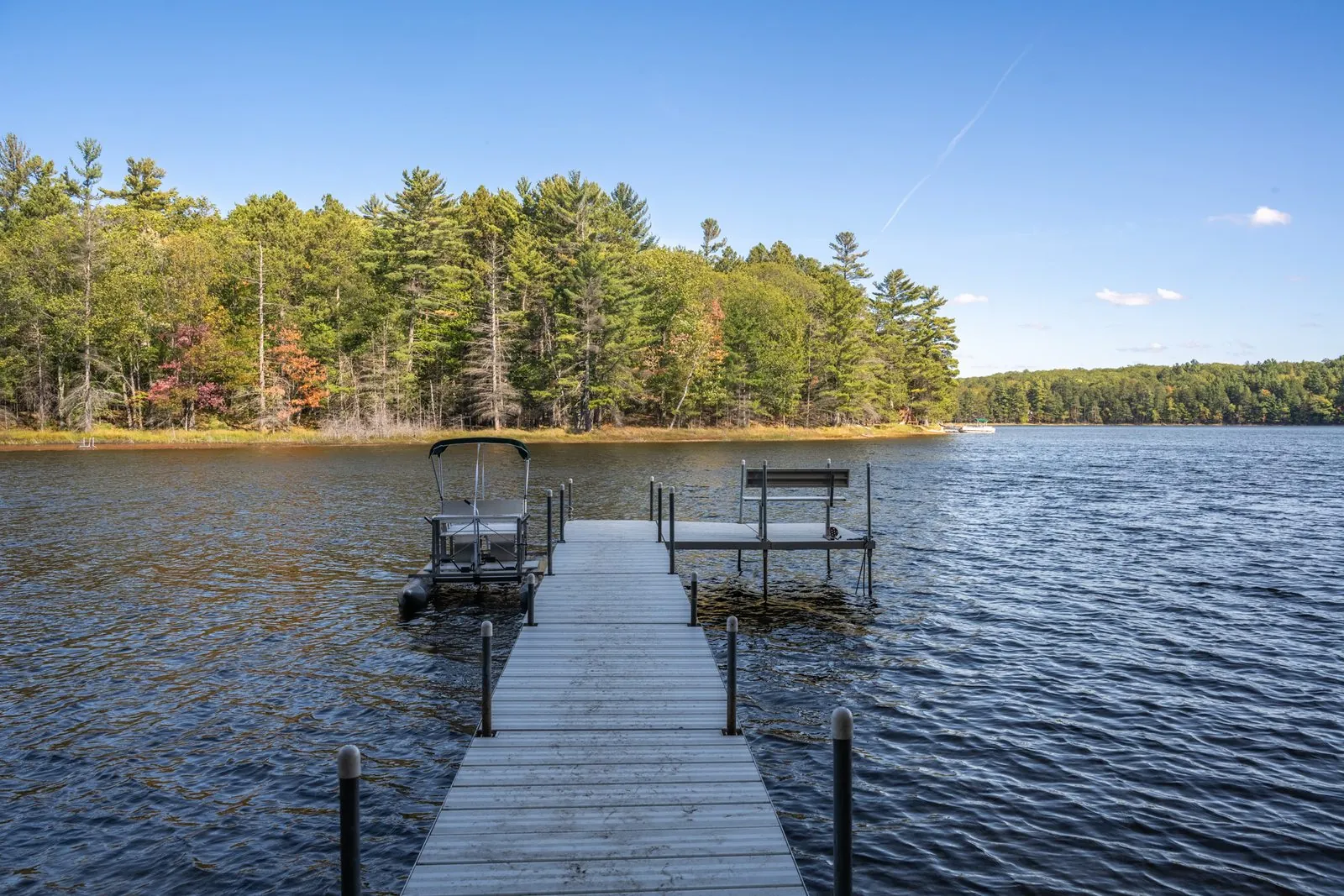
Ask around Eagle River and you'll hear the same phrase again and again: the world's largest chain of freshwater lakes. Dozens of lakes threaded together by narrow channels and stretches of the Eagle River itself, all of it navigable by boat from one end to the other. For a lot of guests, getting out on that water — in a rented pontoon, a fishing boat, or just paddling off the dock — is the whole point of the trip. Here's what we tell first-timers before they push off.
Getting oriented
How does the Eagle River Chain actually connect?
The chain links a long run of lakes through narrow connecting channels and stretches of the Eagle River, so a boat can travel for miles without ever needing a trailer in between. The catch is that those connecting channels are almost always slow, no-wake water, and they're also the busiest, tightest stretches on the whole chain. First-timers do best treating every channel as a place to idle down, watch closely for swimmers, anglers, and kayaks, and save the faster running for open water instead.
It's easy to get turned around the first time you run the chain, since one lake opens into the next with little warning. Keep an eye on the channel markers, go slow when in doubt, and it clicks quickly.
Launches & landings
Where do you put a boat in near Eagle River?
Vilas County maintains public boat landings on most of the major lakes in the chain, which is the easiest way to launch your own boat or a rental if your cabin doesn't sit right on the water. If you're staying with us, both Pine & Dandy cabins solve this a simpler way — The O.G. has a private dock on Lake Arbutus and The Grandy Dandy sits on the Sugar Camp Chain, so you can walk out the door and be on the water in a few minutes, no trailer or landing required.
Choosing a boat
Pontoon, fishing boat, or paddle?
What you bring — or rent — really depends on how you want to spend the day.
Pontoons
The default choice for a lake vacation: stable, social, and easy to drive. Perfect for a slow evening cruise through the channels or an afternoon anchored in a quiet bay with the whole crew aboard.
Fishing boats
Smaller and quicker, built for chasing musky and walleye into the channels and back bays a pontoon can't reach. Pair well with an early-morning start before the chain gets busy.
Kayaks & canoes
For the quiet channels and marshy backwaters where a motor feels like the wrong tool entirely. Both cabins keep kayaks right on the dock, ready whenever you are.
On the water
What are the local rules everyone should know?
Life jackets should be on board for every passenger, and worn by younger kids — check current Wisconsin DNR requirements before you head out, since rules by age and boat type do get updated. The connecting channels around the chain are marked no-wake zones, and locals take that seriously; go slow, no exceptions. Many lakes also settle into quiet hours toward evening, so plan the louder runs for the middle of the day and save the sunset cruise for idle speed. If you're renting, the outfitter will walk you through the specific rules for that stretch of water — and if you're new to the chain, it's always worth asking a local, including your hosts, before you head out solo.
Where to stay with a dock of your own
Both of our cabins put you on the water without a launch or a trailer in sight. The O.G. sits on Lake Arbutus with a private dock and kayaks included; The Grandy Dandy is right on the Sugar Camp Chain with the same setup. Either way, your morning coffee can happen out on the water. For more on the chain itself, our fishing guide and area guide round out the picture.
Good to know